
Key facts: Beach Colony
- Beach Colony lies in Del Mar's North Beach district, close to where the San Dieguito River reaches the ocean.
- City of Del Mar sea level rise planning identifies river flooding as the primary risk for low-lying North Beach homes.
- A levee project has been planned to protect North Beach homes in the 100-year flood zone from river flooding, but not oceanfront lots from ocean flooding.
- Flood water from a river or ocean is treated as Category 3 water under the IICRC S500 standard.
Covered area
Beach Colony streets covered by this line
Calls from Beach Colony and the surrounding North Beach blocks can be connected to an independent restoration contractor.
- 92014Beach Colony and the rest of North Beach, from the streets west of Camino del Mar to the oceanfront and the river mouth area.
About Beach Colony
Why Beach Colony homes take water differently
Beach Colony grew as a summer cottage colony on the flat sandy ground north of the village, a short walk from the beach and from the mouth of the San Dieguito River. Over the decades many of the original cottages were remodeled or replaced, so a single block can hold a small mid-century house, a two-story rebuild on a raised foundation and a modern home with a lower level, all sitting only a few feet above sea level.
That low elevation is the defining fact for water damage. A resident quoted in coverage of the city's planning described roughly six hundred Del Mar homes within a few feet of sea level, most of them in North Beach and Beach Colony. When the river runs high during a big winter storm, water can back up into the streets from the river side. When strong surf coincides with very high tides, the oceanfront lots can see waves and sand pushed over the beach.
The city has studied both. Its coastal hazards and sea level rise work describes river flooding as the main risk for these properties and expects it to grow as seas rise, and local reporting has covered plans for levees that would protect North Beach homes in the 100-year flood zone from river flooding while leaving oceanfront lots exposed to the ocean side. [3] [2] For a homeowner, the practical point is simple: in Beach Colony, water damage is often outdoor water, and outdoor water is contaminated.
Not every loss here is a flood, of course. Beach Colony homes have the same burst supply lines, water heater failures and roof leaks as anywhere else, and many are second homes or rentals where a leak can run unnoticed. But the coastal setting colours almost every job, through salt air, sand, humidity and the chance that a storm will add outside water to an inside leak.
Construction
Beach Colony construction details that affect restoration
Raised floors over sand
Many older cottages and some rebuilds sit on raised wood floors over a shallow crawlspace in sand. Flood water fills that space and soaks the subfloor from below, so drying has to reach underneath.
Slab-on-grade rebuilds
Newer homes are often on concrete slabs. A slab that took flood water dries slowly and needs readings before any new flooring goes down.
Lower levels and garages at street grade
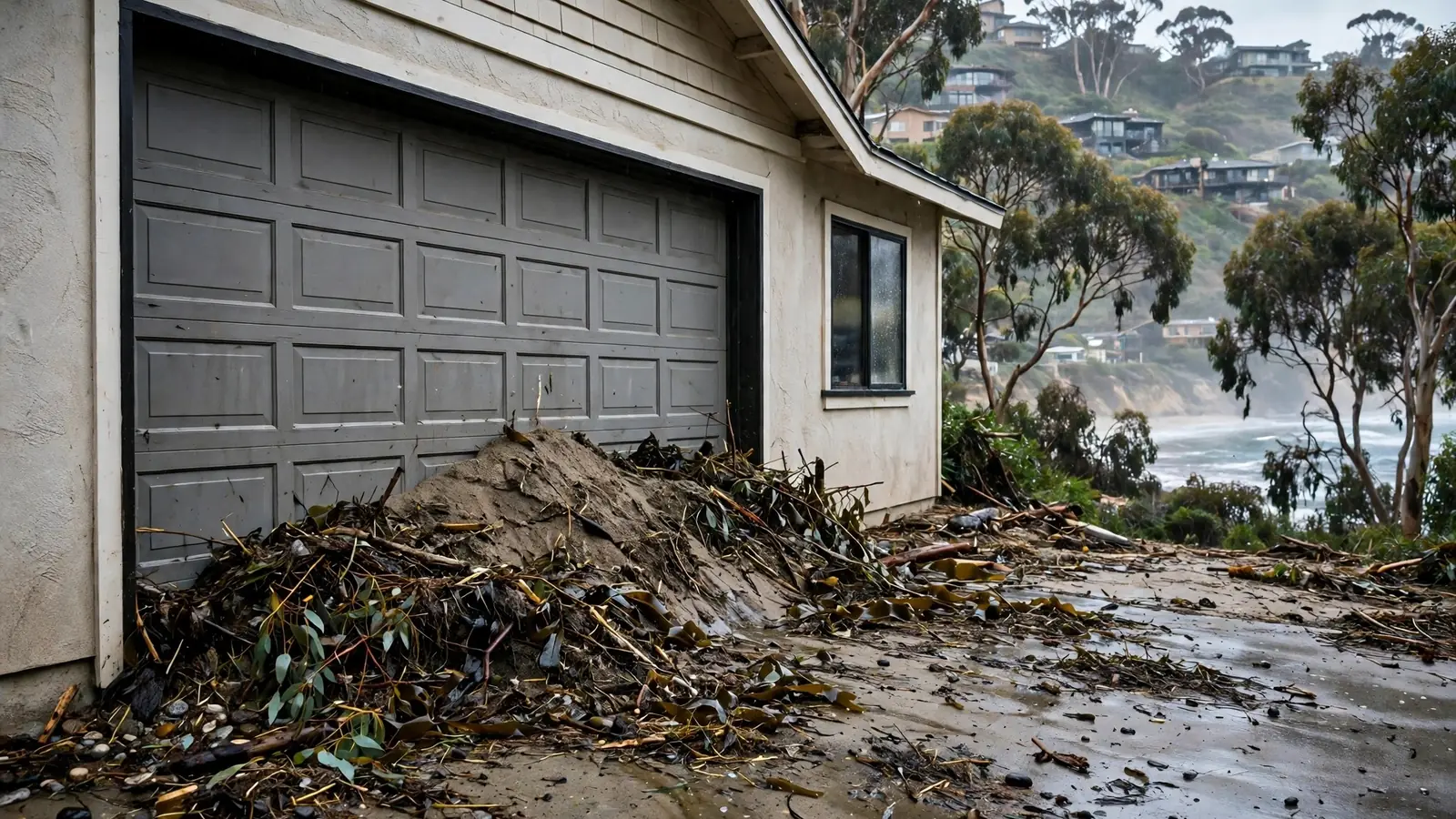
Garages and ground-floor rooms open almost at street level. They are the first to take water when the streets flood.
Exterior finishes facing salt air
Siding, windows, doors and flashing on the ocean side weather quickly in salt air. Failed seals let wind-driven rain inside during winter storms.
Mixed-era plumbing
A remodel may have new PEX in one wing and decades-old galvanized or copper in another. Old sections fail first.
Small, tight lots
Narrow side yards and close neighbors limit where pumps, hoses and dumpsters can go. Access planning is part of the job.
Flood risk
River backup and storm flooding in Beach Colony
The San Dieguito River drains a large inland watershed and reaches the ocean at the north end of Del Mar. Most of the year it is calm, but during heavy rain it carries a lot of water to a mouth that can be partly blocked by sand. When that happens during a large storm, river water can spread into the low streets on the south bank. Storm drains in those streets also have less room to discharge when the river and the tide are both high.
Flood water that comes in this way is slow and wide rather than fast. It tends to bring fine mud and organic debris, and it soaks everything at floor level across several rooms at once. Because it has crossed streets and yards, restoration contractors treat it as Category 3, the most contaminated class, which means carpet, pad, lower drywall and insulation are usually removed rather than dried. [7]
FEMA's flood maps show which Beach Colony lots fall within mapped flood zones. [5] If you have a mortgage on a home in one of them, your lender may already require flood insurance. Either way, the map is worth checking, because a standard homeowners policy normally excludes flood from outside water.
If water is rising, the priorities are the same as anywhere: get people out of the water, keep power off in wet areas, move what you can upstairs, and call once it is safe. Document everything before cleanup begins.
Oceanfront
Ocean water, sand and salt on oceanfront lots
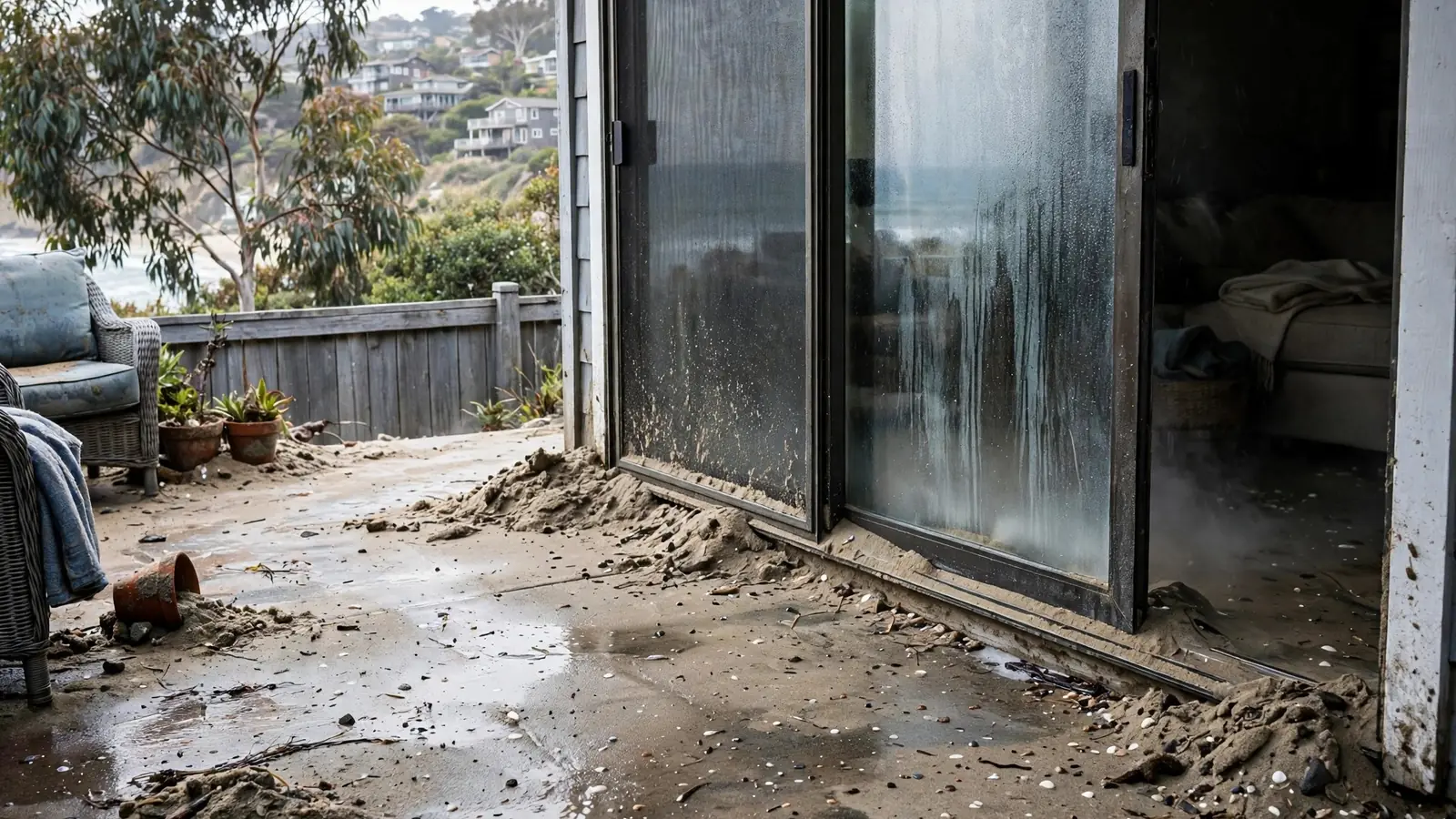
On the lots right behind the beach, the threat is not the river but the surf. Winter storms that line up with very high tides, sometimes called king tides, can send waves and sand over the beach and onto patios, decks and the lowest floors. The water is salty, carries sand and kelp, and arrives in surges rather than a steady rise.
Salt water creates extra work. Metal fasteners, appliance parts and electrical components corrode faster, and salt left in drywall, wood and concrete keeps attracting moisture after the surface dries. Restorers rinse hard surfaces, remove salt-soaked porous materials, and ask an electrician to check anything electrical that saw seawater.
Sand is the other headache. It is heavy, abrasive and gets everywhere: under doors, into floor vents, inside the crawlspace. It is shovelled and vacuumed out before floors are cleaned, because walking it across stone or wood floors scratches them.
- Rinse salt from hard surfaces before drying
- Have outlets, panels and appliances checked
- Remove sand before any floor cleaning
Assessment
What a contractor should check in a Beach Colony home
- 1
Find the source and the water type
Is this river water, ocean water, storm runoff, a plumbing leak, a sewer backup, or a mix of several? The answer sets the contamination category and the removal plan.
- 2
Check the crawlspace or slab
On raised floors, look underneath for standing water, wet vapor barrier and soaked joists. On slabs, take readings across the floor, not just near the source.
- 3
Map the wet zone with meters
Water spreads under walls and along floors. Readings and thermal imaging show its full extent.
- 4
Look for salt and sand
Note any seawater contact, sand intrusion and corrosion on metal parts so they are cleaned properly.
- 5
Plan access on a tight lot
Decide where equipment, hoses and debris bins will go, and how to protect a neighbor's property.
- 6
Document for flood and homeowners claims
Photograph the water line, contents and exterior conditions. Separate flood damage from any internal leak damage in the notes.
What you might see
Beach Colony water damage clues and likely causes
| What you notice | Likely cause | What to do |
|---|---|---|
| Mud line on lower walls after a storm | River backup or street flooding | Treat as Category 3; remove porous materials below and above the line |
| Sand inside the house near doors | Ocean overtopping or wind-driven sand with rain | Remove sand first; check for salt water contact |
| Musty smell from under the floor | Water in the crawlspace | Inspect underneath; dry and replace vapor barrier |
| Rust stains on appliances and fixtures | Salt water or long-term damp air | Electrical and appliance checks; rinse and dry |
| Ceiling stain on the ocean side | Wind-driven rain through windows or flashing | Repair the opening; dry the wall cavity |
| Rising water bill in a second home | Hidden leak while the house was empty | Leak detection; check every level |
Empty houses
Second homes and rentals in Beach Colony
A good number of Beach Colony houses are second homes or rented by the week or season. That makes undiscovered leaks a real risk. A failed toilet supply or water heater can run for days before a neighbor notices water coming under a door. By then the water has spread across floors, into walls and, on raised floors, into the crawlspace below.
If you own a home here that sits empty, consider leak sensors with phone alerts and an automatic shut-off valve, and turn the main water off when the house will be empty for a long stretch. Leave the location of the main shut-off clearly marked for guests and property managers. If you arrive to find damage, document before touching anything and call. The contractor will want to know roughly when the house was last checked.
A short written checklist for guests and managers, kept by the front door, makes the first minutes count.
Drying near the sand
Drying a Beach Colony home in damp sea air
Being steps from the ocean means the outdoor air is often humid, especially on gray late-spring mornings when the marine layer sits over the coast. Restorers working in Beach Colony usually keep windows closed during drying and let dehumidifiers manage the indoor air. On dry days with offshore winds, outdoor air can help, but that decision is based on readings, not habit.
Raised floors need drying from both sides. Equipment runs inside the rooms while ventilation or a dehumidifier works in the crawlspace. Slabs need patience; they can take longer than the rest of the house, and flooring should not go back until the slab reaches its dry goal.
Salt complicates the final readings. A wall that held seawater may test dry on a sunny afternoon and damp again the next foggy morning. Rinsing and removing salt-loaded materials is the fix, not more drying.
Rebuild
Permits, the coastal zone and rebuilding in Beach Colony
Beach Colony is within Del Mar's coastal zone, and much of North Beach is in mapped flood areas. Emergency mitigation work such as extraction, removal of wet materials and drying usually goes ahead immediately, but rebuilding, and especially changes to the structure, can require city review. Ask the City of Del Mar's planning and building staff what applies to your property before you change floor heights, foundations or exterior walls.
Rebuilding after a flood is also a chance to reduce the next one. Moving the electrical panel and water heater higher, using tile or sealed concrete on lower floors and cement board instead of paper-faced drywall in garages and lower rooms all help. Whether raising a home or adding flood vents is allowed depends on current city rules, so check before you design around it.
Insurance
Insurance for Beach Colony water damage
For homes in North Beach, the cause of the water decides almost everything about the claim. Outside water from the river, the street or the ocean is usually a flood claim, handled under a separate flood policy if you have one. Water from inside, such as a burst pipe, is usually a homeowners claim. A sewer backup during a storm may fall under an endorsement. When a storm causes more than one kind of water to enter, careful notes and photos that separate them make a big difference.
FEMA's Flood Map Service Center shows your flood zone, and FloodSmart, the National Flood Insurance Program site, explains flood claims. [6] The California Department of Insurance can help if a homeowners claim stalls. [9]
Prevention
How to prepare a Beach Colony home for winter storms
- 1
Check your flood zone and policy
Look up your lot on FEMA's flood map and confirm whether you carry flood insurance and what it covers.
- 2
Have barriers ready
Keep sandbags or flood barriers for doors and garage openings before the rainy season.
- 3
Clear drains and the crawlspace vents
Clear deck drains, area drains and gutters, and make sure crawlspace vents are not blocked by sand.
- 4
Raise what you can
Store valuables, documents and electronics off the floor in lower rooms and garages.
- 5
Know your shut-offs
Make sure everyone in the house, including guests, knows where the main water valve and electrical panel are.
Before water arrives
What to move first when Beach Colony streets start to flood
Cars out of the garage
Garages at street grade are the first to flood. Moving cars to higher ground protects them and clears space.
Electronics and papers up high
Lift computers, routers, passports, insurance papers and photos to an upper floor or high shelf.
Rugs and small furniture
Roll area rugs and carry small furniture upstairs. A rug lifted is a rug saved.
Chemicals and fuel
Move paint, pool chemicals, fuel cans and cleaners above the expected water line so they do not mix into flood water.
Outdoor items that float
Secure patio furniture, kayaks and bins so they do not batter doors and windows or wash into neighbors' yards.
Outdoor spaces
Decks, patios and lower walls in Beach Colony
Most Beach Colony homes live outdoors as much as indoors, with decks, patios and sliding doors facing the beach or a side yard. Those openings are where storm water and sand usually get in. A deck that drains toward the house, or a patio poured level with the interior floor, can send water under a slider during heavy rain even when the street is not flooded.
After a storm, the restoration contractor should check the threshold area, the wall framing either side of the door and the subfloor just inside, because water that enters at a slider often runs under the bottom plate and into the walls. Once the house is dry, a drainage or decking contractor can look at slope, drains and door sills to reduce the chance of a repeat.
Backups
Sewer and storm drain backups in North Beach
Flat, low ground also affects drains. During heavy storms, storm drains and sewer lines in North Beach have less room to empty when the river and tide are high, and a home's lowest drain can become the outlet. A shower or floor drain that gurgles and rises during a storm is a warning to stop using water and call. Water that comes up through a drain is sewage, even if it looks clear at first, and it needs the full sewage cleanup process: containment, removal of soaked porous materials, disinfection and metered drying. A plumber can say whether a backwater valve would suit your lateral.
FAQ
Beach Colony water damage questions
Does this line cover Beach Colony?
Yes. Calls from Beach Colony and the rest of North Beach in ZIP 92014 can be connected to an independent restoration contractor.
Is river flood water treated differently from a pipe leak?
Yes. River and street flood water is Category 3. Porous materials it soaks are usually removed, and the house is cleaned and disinfected before drying.
What about seawater?
Seawater is treated as contaminated, and salt adds corrosion and moisture problems. Expect rinsing of hard surfaces, removal of salt-loaded materials and electrical checks.
Can my raised floor be dried without tearing it out?
Often yes, if the subfloor is solid and the water was not left too long. Drying works from above and below, and the vapor barrier in the crawlspace is usually replaced.
Will my homeowners policy cover a flood here?
Usually not for outside flood water. A separate flood policy is normally needed. Water from inside the house is a different claim.
How soon should drying start after a Beach Colony flood?
As soon as the water has receded and it is safe to enter. Mold can begin within 24 to 48 hours on wet materials. [8]
Can work start if the house is a rental with guests booked?
Mitigation should start right away to limit damage. Talk with the contractor about how long the affected areas will be out of use so you can manage bookings.
Should I wait for the adjuster before starting cleanup?
No. Document the damage thoroughly with photos and video, tell your insurer, and start mitigation. Waiting lets the damage grow, and most policies expect you to protect the property.
Do I need a permit to rebuild?
Mitigation usually does not, but rebuild and structural changes in the coastal zone can. Check with the City of Del Mar before you start.
Sources and citations
- [1]Coastal Commission: City of Del Mar Local Coastal Program sea level rise grant application
- [2]California Coastal Commission: San Diego region sea level rise vulnerability
- [3]San Diego Reader: Del Mar to build levees to lessen flood damage (2024)
- [4]Wikipedia: San Dieguito River
- [5]FloodSmart (FEMA): Flood zones and maps
- [6]FloodSmart (National Flood Insurance Program)
- [7]IICRC S500 Standard for Professional Water Damage Restoration
- [8]EPA: A brief guide to mold, moisture and your home
- [9]California Department of Insurance
- [10]EPA: Protect your family from exposures to asbestos
- [11]EPA: Renovation, Repair and Painting Program
- [12]Wikipedia: Del Mar, California