
Key facts: Flood Cleanup
- Water that enters from outside after a flood is treated as Category 3 (grossly contaminated) water under the IICRC S500 standard.
- Federal mold guidance says wet materials should be dried within 24 to 48 hours to limit mold growth.
- City of Del Mar studies name San Dieguito River flooding as the main risk for the low-lying North Beach area.
- Standard homeowners policies usually exclude flood; flood cover is a separate policy such as one from the National Flood Insurance Program.
How it works
How flood cleanup differs from a plumbing leak
A supply line that splits under a sink sends clean, pressurised water into a room. Flood water arrives from the ground up and from outside, so it has already run across streets, yards, parking lots and sometimes overflowing sewer lines before it reaches the floor. That changes almost every decision a contractor makes. Porous materials that would be dried in place after a clean leak are usually cut out after a flood, because the dirt and bacteria have soaked into them along with the water.
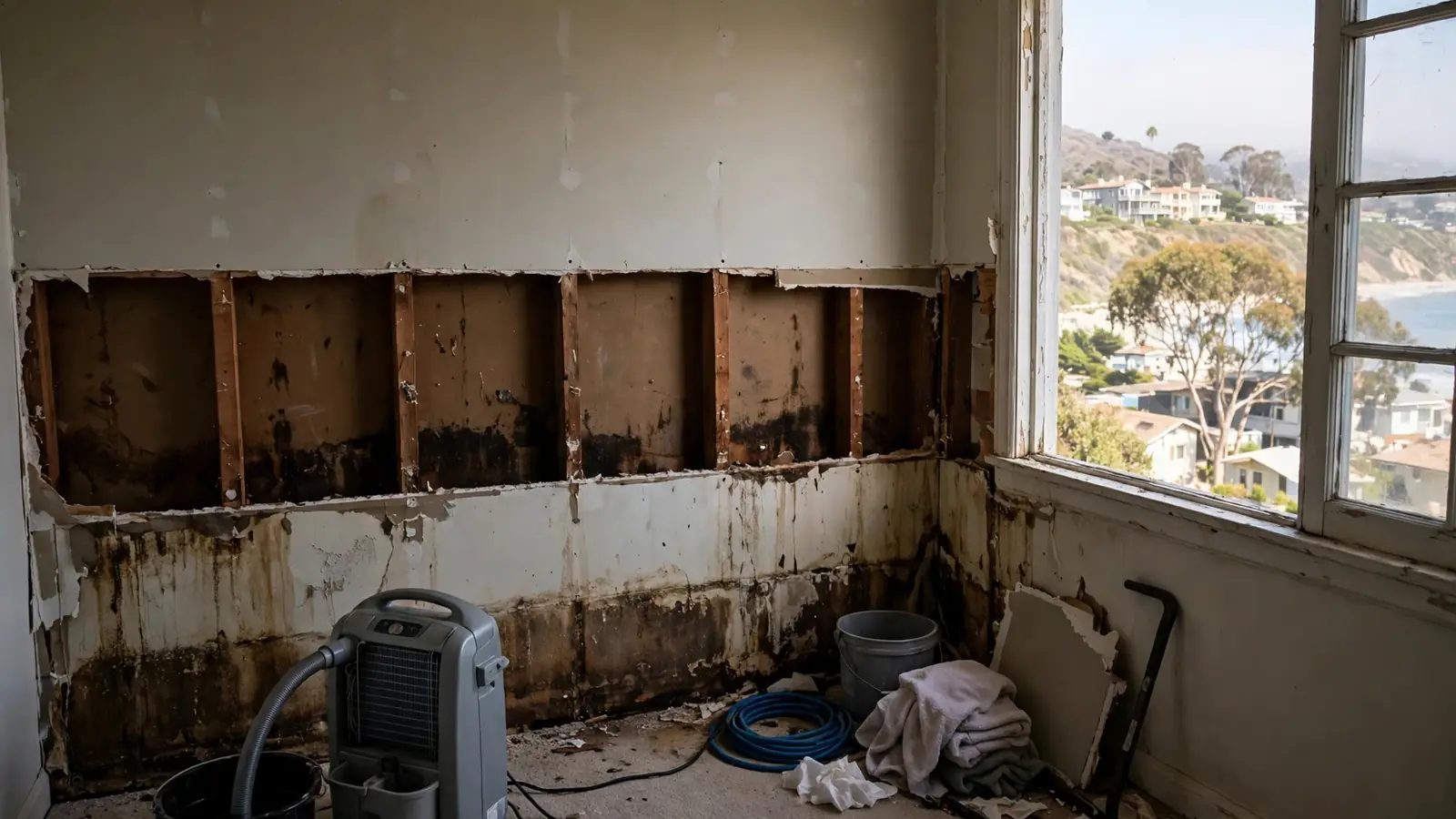
The cleanup itself follows a fixed order. First the source has to stop: the river crest has to pass, the storm has to ease, or the tide has to drop. Then standing water is pumped or extracted, silt and debris are shovelled and vacuumed out, flood-soaked drywall, insulation, carpet and pad are removed to a line above the high-water mark, every surface the water touched is cleaned and disinfected, and finally the framing, slab and subfloor are dried with dehumidifiers and air movers until moisture readings match unaffected parts of the house.
Skipping any step tends to show up weeks later. Silt left inside a wall cavity keeps feeding mold. A slab that felt dry on the surface can still hold enough moisture to ruin new flooring. Baseboards nailed back over damp studs trap water against wood. The goal of a proper flood cleanup is not to make a room look clean on day two, but to leave a structure that is clean, dry and ready to rebuild.
In Del Mar the type of flood also matters. River backup in the low streets near the river mouth tends to bring fine mud and slow, wide water. Hillside runoff in Olde Del Mar and Del Mar Terrace arrives fast and concentrated, often through a door or a lower-level wall. Ocean overtopping during high surf and king tides brings sand and salt. Each leaves a different residue and needs a slightly different plan.
Warning signs
Signs flood water reached more than you can see
A tide line on the walls
A faint brown band on paint or wallpaper marks the high-water level. Drywall wicks water upward, so the wet zone inside the wall usually sits several inches above that line.
Sand or fine mud in corners
Silt settles where water slowed down: behind doors, under cabinets, along baseboards. Where you find silt, assume the water carried bacteria into the materials there.
Swollen door frames and baseboards
MDF trim and door casings swell and split when they sit in water. Swelling shows the water was present long enough to soak in, not just wet the surface.
A musty or sewage smell
Flood water picks up whatever it crosses. A sour or sewage odour after the water drains means the materials it touched need cleaning or removal, not just drying.
Cold, damp floors days later
Concrete slabs and plywood subfloors hold water long after the surface looks dry. A floor that still feels cool and clammy is usually still wet underneath.
Electrical outlets that were submerged
Any outlet, power strip or appliance that sat in flood water needs inspection by an electrician before use. Water and silt left inside a box create a shock and fire risk.
Local causes
Where Del Mar flooding comes from
Del Mar sits where the San Dieguito River meets the Pacific, and the low ground on both sides of the river mouth has a long history of flood risk. City planning work on sea level rise describes river flooding as the main threat to the North Beach district, which includes the Beach Colony area, and notes that higher seas combined with heavier storms are expected to make those floods deeper and more frequent. [4] The city has discussed river channel dredging, levees and raising structures as ways to reduce the damage. [5]
Not every flood in town is a river flood. Winter storms on the San Diego coast often arrive as atmospheric rivers, long bands of moisture that can drop several inches of rain in a short time. [7] When that happens, hillside streets shed water downhill faster than storm drains can take it, and homes at the bottom of a slope or with lower levels cut into the hill take the runoff. Driveways that slope toward a garage are a common entry point.
On the oceanfront, high surf during winter storms can push sand and seawater over the beach and onto the lowest lots, especially when it coincides with an extreme high tide. Salt water adds corrosion to the list of problems, attacking metal fasteners, appliances and electrical parts faster than fresh water does.
Finally, a flood can start inside. A failed sump pump, a blocked area drain under a deck, or a sewer backup through a floor drain during a storm can flood a lower level even when the street stays dry. A contractor will ask where the water entered first, because the source decides the contamination level and the cleanup method.
The cleanup
The order a Del Mar flood cleanup follows
- 1
Confirm it is safe to enter
Power to flooded areas should be off before anyone walks through standing water. If the main panel is in the wet area, the utility or an electrician needs to make it safe. Watch for gas smells, sagging ceilings and displaced furniture.
- 2
Document before anything moves
Photograph and video every room, the water line, damaged contents and the exterior. Insurance adjusters and flood claims need to see the conditions before removal starts.
- 3
Extract standing water and silt
Truck-mounted or portable pumps remove the bulk water. Squeegees, shovels and wet vacuums take out mud. Silt is bagged as contaminated waste rather than washed into the yard.
- 4
Remove flood-soaked porous materials
Carpet and pad, drywall to a line above the wet zone, wet insulation, particleboard cabinets and swollen trim are cut out. The IICRC guidance treats these as unsalvageable when contaminated.
- 5
Clean and disinfect what stays
Studs, slab, tile, metal and solid wood are scrubbed, rinsed and treated with an antimicrobial suited to the surface. Cleaning comes before drying so dirt is not baked in.
- 6
Set up drying and monitor daily
Dehumidifiers and air movers run in a contained area. Moisture readings are taken and logged each day on framing, subfloor and slab until they reach the dry standard.
- 7
Verify and hand over for rebuild
A final set of readings, photos and a written drying log show the structure is dry. Only then do drywall, insulation and flooring go back in.
Water categories
Flood water types and how each is handled
| Category | Typical Del Mar source | What it means for cleanup |
|---|---|---|
| Category 1 (clean) | Broken supply line, overflowing clean sink | Porous materials may be dried in place if caught fast; it can degrade within a day or two |
| Category 2 (grey) | Washing machine overflow, dishwasher discharge | Carpet pad usually removed; surfaces cleaned and treated before drying |
| Category 3 (black) | River or storm flood water, ocean overtopping, sewer backup | Porous materials removed; full cleaning and disinfection; protective gear required |
| Salt water | High surf and king tide flooding on oceanfront lots | Treated as contaminated; extra rinsing of metal parts and electrical inspection for corrosion |
Coastal residue
Silt, sand and salt after coastal flooding
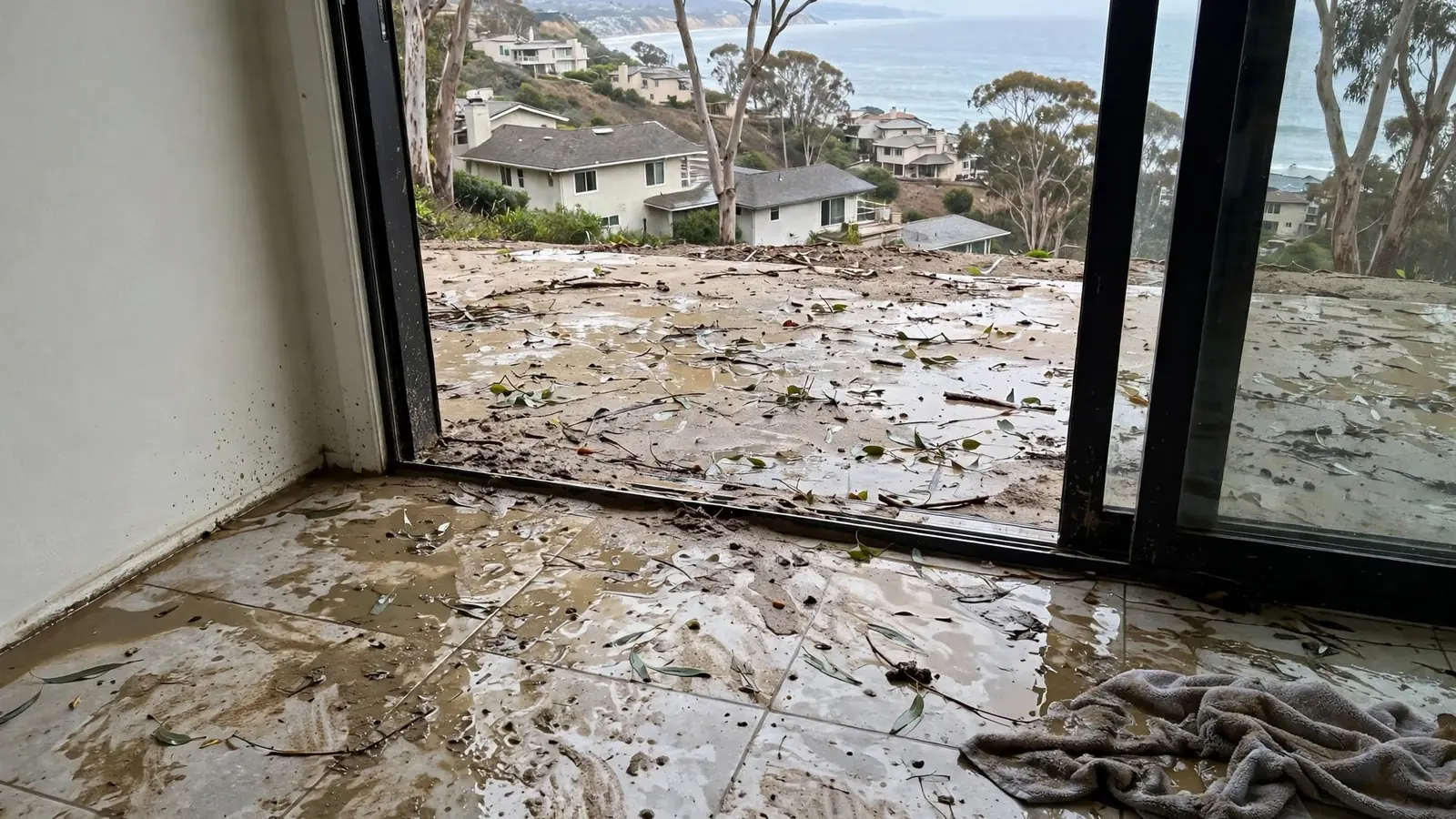
Mud left by river water is finer than most people expect. It slips under baseboards, into outlet boxes and through gaps under cabinets, and it dries into a dusty layer that spreads through the house if it is swept dry. Restorers keep it wet while removing it, bag it, and then clean the surfaces underneath.
Salt adds a slower kind of damage. It keeps drawing moisture out of the air, so a wall that held seawater can feel damp again on a humid morning even after it tested dry. Thorough rinsing of hard surfaces, removal of salt-soaked insulation and inspection of electrical parts are part of a coastal flood job.
Sand is heavy and abrasive. It scratches stone and wood floors when walked on, clogs vacuums and drain lines, and can hide under rugs for weeks. It is removed before any floor cleaning begins.
- Keep silt wet while it is removed
- Rinse metal hardware and appliances that saw salt water
- Have outlets and panels checked before re-energising
Materials
What usually stays and what usually goes after a flood
| Material | Usual decision | Why |
|---|---|---|
| Carpet and pad | Remove | Pad absorbs contaminated water and cannot be fully cleaned |
| Drywall below and just above the water line | Remove | Paper facing and gypsum hold bacteria and wick water upward |
| Fiberglass and cellulose insulation | Remove | Loses its loft and holds contaminated water |
| Particleboard and MDF cabinets and trim | Usually remove | Swells and breaks down once soaked |
| Solid wood framing | Clean, treat and dry | Structural lumber recovers if dried properly |
| Concrete slab | Clean, treat and dry | Dries slowly; readings are needed before new flooring |
| Ceramic tile and stone | Clean and inspect | Surface cleans well; grout and underlayment may hold water |
| Upholstered furniture and mattresses | Usually discard | Deep layers cannot be disinfected reliably |
DIY or professional
DIY limits after a Del Mar flood
Some flood work is reasonable to do yourself, especially when the water was shallow and clean. Moving furniture and contents to a dry room, photographing everything, mopping a few inches of water off tile and opening windows when outdoor air is dry all help. The line is contamination and hidden moisture. Once the water came from outside, from a river or from a sewer, the materials it soaked need to be removed with protective gear, and the structure needs metered drying.
Hidden moisture is the part homeowners most often underestimate. Water runs under bottom plates, into wall cavities and along slab cracks. A box fan dries the air in a room but does little for a stud bay behind drywall. Restorers use moisture meters and thermal cameras to find the wet zones, then size dehumidifiers to the volume of the space. That measurement is also what an insurer usually wants to see.
If you choose to start yourself, keep a written log: when the water came in, how deep it reached, what you removed and what you threw away, with photos. It helps the contractor and the adjuster pick up where you left off.
The visit
What happens during the first visit
- 1
The call
You describe where the water came from, how deep it was, which rooms are affected and whether power is on. The contractor on the call can tell you what to do right now and when they can come.
- 2
Walkthrough and readings
On arrival the contractor checks safety, takes moisture readings in every affected room and in unaffected rooms for comparison, and photographs conditions.
- 3
Scope and plan
You hear which materials should be removed, how drying will be set up and how long it is likely to take. Ask for this in writing so you can share it with your insurer.
- 4
Mitigation starts
With your agreement, extraction, removal and drying begin. Most flood mitigation runs over several days with daily monitoring visits.
- 5
Close-out
Final readings, a drying log and photos are handed over. Rebuild is a separate phase you can arrange with the same contractor or another one.
Insurance
Flood insurance and paperwork in Del Mar
Standard homeowners policies in California generally exclude damage from flooding, meaning surface water from outside. Flood cover is usually a separate policy, often written through the National Flood Insurance Program or a private flood insurer. [10] Many homes near the river mouth that carry a mortgage are required to hold flood cover because of their flood zone, which you can check on FEMA's flood map. [9]
Water that starts inside, such as a burst pipe, is a different kind of claim and is often covered by the homeowners policy, subject to its terms. A flood that came in through a sewer drain may fall under a separate endorsement. That is why the first questions matter: where did the water start, and how did it get in? The California Department of Insurance has consumer help if a claim stalls. [11]
Whatever the policy, the evidence is the same: dated photos and video before removal, a list of damaged contents, moisture readings and the drying log. Keep receipts for anything you buy to protect the property.
Prevention
Preventing the next flood from doing the same damage
In a flood-prone part of Del Mar, preventing every flood is not realistic, but limiting the damage is. Know your flood zone. Keep sandbags or flood barriers on hand before the rainy season, and clear area drains, gutters and deck drains in the fall. If your lot slopes toward the house, a drainage contractor can look at grading, channel drains and downspout extensions.
Inside, moving the electrical panel, water heater and laundry above the expected water level reduces both damage and recovery time. Water-resistant materials on lower floors, such as tile, sealed concrete and cement board, survive a flood far better than carpet and paper-faced drywall. If you rebuild after a flood, ask whether flood vents, raised outlets or a higher finished floor are allowed under current city rules.
Finally, keep a short plan: where the main water valve and electrical panel are, who to call, where important papers are stored, and which rooms to empty first. When the river or the storm drains rise at night, a plan saves time.
Related problems
Problems that often follow a flood
Mold in wall cavities
When wet drywall stays in place or silt is left behind the baseboard, mold can appear within days. It often shows first as a smell or as spotting low on the wall.
Sewage in the lower level
Heavy rain can overload sewer lines and push waste back through floor drains and lower toilets. That water needs the full sewage cleanup process, not just drying.
Lifting wood floors
Hardwood and engineered planks cup and crown as they absorb water from below. Some recover with controlled drying; others need replacement once readings settle.
Corroded electrical parts
Salt and silt inside outlets, junction boxes and appliance controls can cause faults weeks later. An electrician should check anything that sat in water.
FAQ
Flood cleanup questions from Del Mar homeowners
Is flood water always considered contaminated?
For restoration purposes, yes. Water that enters from outside after a river overflow, storm runoff or ocean overtopping is treated as Category 3, the most contaminated class, because it has crossed soil, streets and sometimes sewage. [1]
Can I save carpet after a flood?
Carpet and pad soaked by flood water are usually removed. Pad cannot be cleaned and carpet holds contamination in its backing. Area rugs of high value can sometimes be cleaned off-site by a rug specialist.
How fast should cleanup start?
As soon as it is safe. Mold guidance recommends drying wet materials within 24 to 48 hours, and silt and contamination get harder to remove as they dry. [2] The contractor on the call can tell you how soon they can arrive.
Do I need to leave the house?
If the flooded area is small and power and sanitation work, many families stay. If sewage is involved, the kitchen or only bathroom is affected, or there is widespread demolition, a short stay elsewhere is often easier.
Will my homeowners insurance pay for flood cleanup?
Usually not for outside surface water; that normally needs a separate flood policy. Water from an internal source is often covered under the homeowners policy. Check your policy and talk with your agent.
How long does drying take after a flood?
Most structures dry in three to five days once wet materials are removed, but slabs and dense wood can take longer. Daily readings show when it is done; a calendar date does not.
What should I throw away?
Food, medicine, cosmetics and baby items that touched flood water, plus mattresses and upholstered items that soaked through. Photograph them for your claim before disposal.
Can this line help with a flooded business?
Yes. Calls about shops, restaurants and offices are connected to an independent contractor as well. See the commercial water damage page for how those jobs differ.
Sources and citations
- [1]IICRC S500 Standard for Professional Water Damage Restoration
- [2]EPA: A brief guide to mold, moisture and your home
- [3]Coastal Commission: City of Del Mar Local Coastal Program sea level rise grant application
- [4]California Coastal Commission: San Diego region sea level rise vulnerability
- [5]San Diego Reader: Del Mar to build levees to lessen flood damage (2024)
- [6]Wikipedia: San Dieguito River
- [7]NOAA: What are atmospheric rivers?
- [8]OSHA: Flood preparedness and response
- [9]FloodSmart (FEMA): Flood zones and maps
- [10]FloodSmart (National Flood Insurance Program)
- [11]California Department of Insurance
- [12]EPA: Protect your family from exposures to asbestos
- [13]EPA: Renovation, Repair and Painting Program