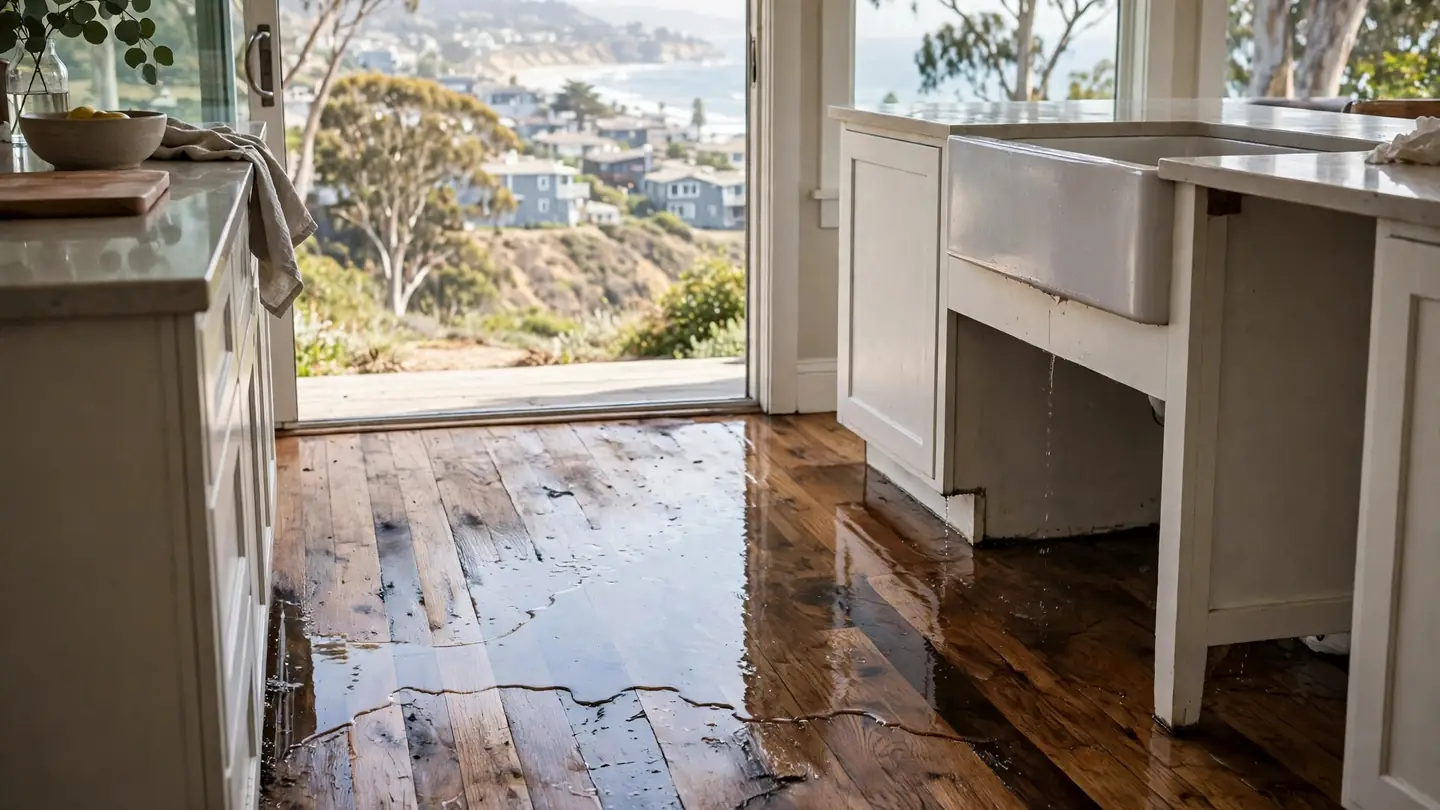
Key facts: Water Damage Cleanup
- Clean water from a supply line is Category 1 under the IICRC S500 standard, but it can degrade to a more contaminated category within a day or two.
- EPA guidance says wet materials should be dried within 24 to 48 hours to prevent mold growth.
- Moisture meters and thermal imaging are used to find water inside walls and under floors that cannot be seen.
- Sudden internal water damage, such as a burst pipe, is often covered by homeowners insurance, while long-term leaks may be excluded.
How it works
What water damage cleanup covers
Water damage cleanup is the work between the moment water stops and the moment the house is ready for repairs. It covers four things: getting standing water out, removing materials that are too damaged or too contaminated to keep, cleaning what stays, and drying the structure. Done well, it prevents the second wave of damage that follows a leak: mold, swelling wood, delaminating floors and odors.
The approach depends heavily on the water. A clean supply line caught within a few hours is the best case. Carpet can sometimes be lifted, the pad replaced and the carpet dried and relaid. Drywall can often be dried in place by drilling small holes at the base and pushing dry air into the cavity. When the leak ran for days, came from a drain, or soaked through to a ceiling below, more materials have to come out.
Every decision should be backed by measurements. A contractor takes moisture readings in affected rooms and in a dry room for comparison, maps where the water travelled, and sets a dry goal for each material. Equipment is sized to the space. Readings are taken every day, and the job ends when the numbers match the goal, not when the room feels dry.
Del Mar's climate helps and hurts. Mild temperatures mean equipment works efficiently, but marine air near the coast is often humid, especially during May and June gloom, so opening windows does not dry a house the way it might inland. Closed-room drying with dehumidifiers is usually the faster route.
Warning signs
Signs of water damage you might not notice
Paint bubbling or peeling low on a wall
Water wicking up drywall from a hidden leak pushes paint away from the surface. It often appears near bathrooms, kitchens and laundry rooms.
Floors that feel soft or have lifted edges
Laminate, engineered wood and vinyl plank swell and separate when water gets underneath. Soft spots in a subfloor can mean a long-term leak.
A water bill that jumped without explanation
A rise in use with no change in habits often points to a slab leak, a running toilet or a leak in an irrigation line.
Stains on a ceiling below a bathroom
A brown ring on the ceiling under a shower or toilet usually means a failed wax ring, cracked drain or shower pan leak above.
Warm spots on a slab floor
A warm patch on tile or concrete can mean a hot water line leaking under the slab. It is worth having a leak detection plumber check.
Musty smell in one room
A persistent damp smell where nothing looks wet is often the first clue to water inside a wall or under cabinets.
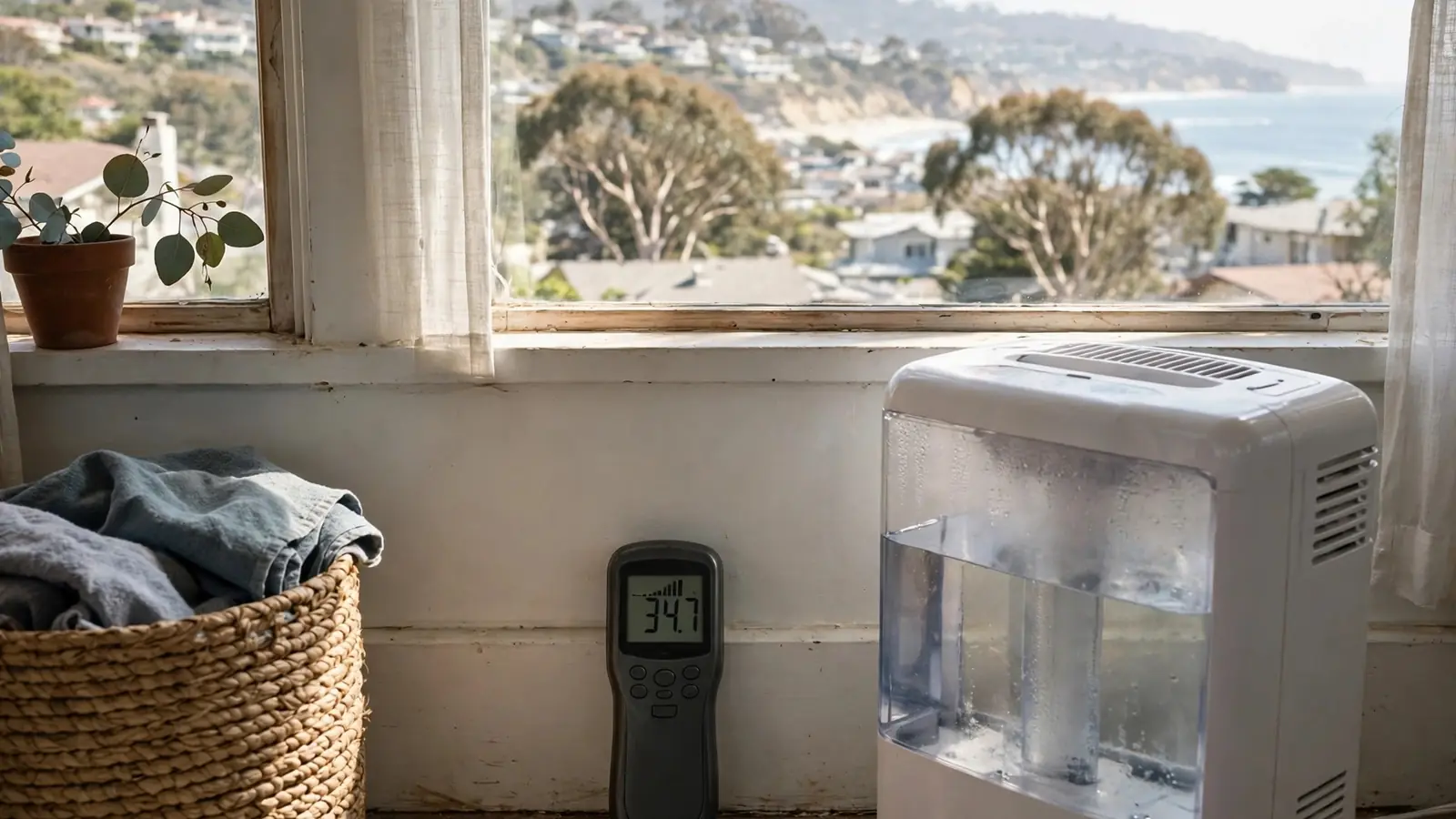
Local causes
Common water damage sources in Del Mar homes
The housing stock in and around Del Mar ranges from beach cottages and 1950s houses to 1970s tract homes in Del Mar Heights and large remodels and new builds on the hills. Older homes often still have galvanized steel supply pipe somewhere in the system, which rusts from the inside and leaks at threaded joints. Later homes usually use copper, which can develop pinhole leaks, and many remodels use PEX.
Water heaters are a frequent source. In much of coastal San Diego County they sit in garages or closets, and when a tank finally fails it can release forty or fifty gallons quickly and keep refilling until someone shuts the supply. Washing machine hoses, refrigerator ice-maker lines, dishwasher connections and toilet supply lines are the other usual suspects.
Roof leaks show up during the winter storm season. Homes near the ocean face wind-driven rain and salt air, which wears flashing, skylights and sealants faster. A small roof leak can soak attic insulation and drip down inside a wall for weeks before a stain appears on a ceiling.
Slab leaks are common in homes built on concrete foundations. Pipes embedded in or under the slab can wear through where they rub against concrete or gravel, and the water spreads under flooring before it shows anywhere.
The cleanup
How indoor water damage is cleaned up
- 1
Stop the water
Close the fixture valve or the main shut-off. If the source is a water heater, close its cold supply valve. A plumber repairs the leak before drying ends.
- 2
Make the area safe
Turn off power to wet rooms at the panel if outlets or cords are wet. Move furniture and contents out of the water, or set furniture legs on blocks or foil.
- 3
Extract standing water
Wet vacuums and extraction tools pull water from carpet, tile and concrete. Extraction removes far more water than evaporation ever will, so it shortens drying.
- 4
Trace where the water went
Meters and a thermal camera find wet drywall, framing, subfloor and cabinets beyond what is visible. The map guides what is removed and where equipment goes.
- 5
Remove what cannot be dried
Wet carpet pad, swollen trim, wet insulation and sometimes the lower part of drywall come out. Cabinet toe kicks may be removed to dry the space underneath.
- 6
Dry with dehumidifiers and air movers
Air movers push air across wet surfaces and dehumidifiers pull the moisture out of the air. Wall cavities and under-cabinet spaces may get injection drying.
- 7
Monitor and close out
Readings are logged daily. Equipment is adjusted as materials dry. When every material meets its goal, the contractor records final readings and removes equipment.
By source
Leak sources and what they usually damage
| Source | Where water goes | What often needs attention |
|---|---|---|
| Toilet supply line | Bathroom floor, nearby hallway, ceiling below | Baseboards, vanity base, subfloor, ceiling drywall below |
| Water heater tank failure | Garage or closet, adjoining rooms | Wallboard, door frames, stored items, slab |
| Washing machine hose | Laundry room and nearby rooms | Cabinets, floors, walls; ceiling below if upstairs |
| Dishwasher or fridge line | Kitchen floor, under cabinets | Cabinet bases, flooring under appliances, subfloor |
| Slab leak | Under flooring across one or more rooms | Flooring, tack strip, slab moisture; plumbing repair |
| Roof or skylight leak | Attic, ceiling, inside walls | Insulation, ceiling drywall, framing; roof repair |
| Shower pan or drain leak | Wall behind shower, floor, ceiling below | Wall cavity, subfloor, ceiling; often needs tile work |
Detection
Finding water you cannot see
Water rarely stays where it lands. It runs under walls on top of the slab, follows pipes through framing, and spreads along the underside of flooring. The visible wet spot is often only a fraction of the real area.
Pin and pinless moisture meters read the moisture in drywall, wood and concrete. Thermal cameras show the cool signature of evaporating water across a wall or ceiling. Together they let a contractor draw a map of the wet zone, which decides where to remove materials and where to put equipment.
Ask the contractor to show you the readings and the map. It is your best evidence for an insurance claim, and it explains why a wall that looks fine might still need attention.
- Meters for drywall, wood and concrete
- Thermal camera scans
- A written moisture map for your records

Materials
Drying in place or removing: how the decision is made
| Material | Dry in place when | Remove when |
|---|---|---|
| Carpet | Clean water, caught within about a day, no delamination | Contaminated water, delamination or long soak |
| Carpet pad | Rarely | Almost always, because it soaks through and dries very slowly |
| Drywall | Clean water, no sagging, readings dropping | Contaminated, soft, sagging or mold present |
| Insulation | Not usually dried in place | Wet fiberglass or cellulose in walls or ceilings |
| Hardwood floors | Mild cupping, good readings response | Severe buckling or no improvement after drying |
| Laminate and vinyl plank | Rarely, as water trapped below dries slowly | Usually lifted to dry the subfloor |
| Cabinet bases | Solid wood or plywood | Particleboard that has swollen |
DIY or professional
What you can do yourself, and where it stops
For a small spill of clean water on a hard floor, mopping up, running a fan and checking the baseboard after a day is usually enough. You can also help a lot in the first hour on a bigger leak: shutting off the water, moving contents, pulling up area rugs, wiping furniture and photographing everything.
Where DIY stops is the hidden part. Once water has soaked into a wall, under cabinets, under laminate or through a ceiling, household fans will not dry it before mold has a chance to grow. A rented dehumidifier helps but is not sized for the space, and without meters you cannot tell when the structure is actually dry. Many claims are denied or reduced later because the drying was not documented.
If you have any doubt, call. The contractor on the line can help you decide whether what you have needs a visit.
The visit
What the first visit looks like
- 1
On the phone
You explain what leaked, for how long, which rooms are affected and whether the water is shut off. The contractor tells you what to do while you wait.
- 2
Inspection
The contractor walks the area, checks safety, takes readings and maps the wet zone, and photographs conditions.
- 3
Plan
You get an explanation of what should be removed, what can dry in place, what equipment will run and for how long.
- 4
Setup
Extraction, any removal and equipment setup happen the same visit once you agree.
- 5
Monitoring
The contractor returns, usually daily, to take readings and adjust equipment until drying is complete.
Insurance
Insurance for sudden indoor leaks
Homeowners policies commonly cover sudden and accidental water damage from inside the home, such as a burst pipe or a failed supply hose. They often exclude water damage from long-term leaks, wear and tear, or lack of maintenance, and the plumbing repair itself may be treated differently from the resulting damage. Policies vary, so read yours.
Report the loss promptly and take reasonable steps to prevent further damage, which is what the mitigation work does. Keep photos, readings, the drying log and receipts. If you have trouble with a claim, the California Department of Insurance offers consumer help and information about your rights. [3]
Prevention
Preventing the next leak
Replace rubber washing machine hoses with braided steel ones and check them each year. Replace toilet and faucet supply lines when they are more than a few years old or show bulging. Know where your main shut-off is and make sure it turns. Have your water heater checked, and consider a drain pan with a line to the outside or a floor drain.
Leak detection devices are now widely available. Small sensors under sinks, behind toilets and beside the water heater send an alert to your phone, and some automatic shut-off valves can close the main when they sense a leak. For homes that are empty for weeks at a time, which is common for second homes near the beach, a shut-off valve can be the difference between a damp floor and a ruined lower level.
Roofs and skylights near the ocean deserve a look every fall before the rainy season, along with gutters and downspouts. Have a plumber check for slab leaks if your water use rises without an explanation.
Related problems
Problems that follow untreated leaks
Mold growth
Mold can start within 24 to 48 hours on damp materials. [2] Fast drying is the best prevention.
Wood rot
Framing, sill plates and subfloor that stay wet for weeks lose strength and need replacement.
Flooring failure
Hardwood cups and crowns, laminate swells at the seams and tile can loosen as the subfloor moves.
Pest activity
Damp wood and wall cavities attract termites and other insects, which are common in coastal Southern California.
Empty houses
Leaks in second homes and rentals
A good share of homes near the beach in Del Mar are second homes or short-term and seasonal rentals. That changes how water damage plays out. A supply line that fails on a Tuesday in an occupied house is noticed in minutes; the same failure in a house that sits empty for three weeks can run the whole time, soak every floor on that level and leave mold growing before anyone opens the door.
If you own a home you do not live in full time, ask a neighbor or property manager to check it regularly, shut off the main water when you leave for long stretches, and think about leak sensors and an automatic shut-off. If you arrive to find damage, photograph it before touching anything, open no wall coverings yourself and call. The contractor will need to know roughly how long the water ran, because that decides how much has to come out.
For rentals, guests often do not know where the main shut-off is. A simple label on the valve and a note in the house guide can save a floor.
Upstairs leaks
When water comes through the ceiling
A leak on an upper floor almost always means two rooms of damage: the room where it started and the one below. Water runs through the subfloor and along joists, collects on top of the ceiling drywall and then finds a light fixture, a seam or a nail hole to come through. A sagging, bulging ceiling is holding water and can fall without warning.
Cleanup starts with draining the ceiling safely, usually by puncturing the lowest point with the area cleared and a bucket ready, then removing wet insulation in the ceiling cavity. Wet ceiling drywall is often removed rather than dried, because it sags as it dries and the paper face stains. The joists and the subfloor above are then dried from both sides.
Older homes
Older plaster walls and original floors
Some of the older houses in Del Mar still have lath and plaster walls or original hardwood floors. Plaster takes on water more slowly than drywall but holds it longer, and it can lose its bond to the lath when wet. It is usually dried in place with careful monitoring rather than torn out. Original oak or fir floors often respond well to controlled drying with specialized floor mats, which pull moisture out through the boards. Ask whether the contractor has experience with these materials before anything is removed, because they are difficult to replace to match.
FAQ
Water damage cleanup questions in Del Mar
How quickly should cleanup start after a leak?
As soon as the water is stopped. Mold guidance points to 24 to 48 hours for drying wet materials, and clean water becomes more contaminated as it sits.
Will my wet drywall have to come out?
Often yes, if the water was clean, it was caught quickly and the drywall is firm. Contaminated, soft or moldy drywall is removed.
How many days does leak drying take?
Most indoor leaks take three to five days of drying. Dense hardwood floors, plaster walls and slabs can take longer.
Do I need to move out during drying?
Usually not. Equipment is noisy and runs around the clock, but most people stay. If the kitchen or only bathroom is out of service, a short stay elsewhere may be easier.
Should I run my air conditioning?
Moderate cooling and running the system can help, unless the water was contaminated, in which case keep the system off in that area to avoid spreading it.
Is a slab leak water damage cleanup or plumbing?
Both. A leak detection plumber finds and repairs the pipe; a restoration contractor dries the flooring and slab.
Will the equipment raise my power use?
Dehumidifiers and air movers use electricity around the clock, so expect some increase while they run. Ask the contractor how many units the job needs.
Can I keep my furniture in the room during drying?
Usually it is moved out or raised on blocks so air can reach the floor and the legs do not wick water or stain the carpet. Wood furniture that got wet should dry slowly, away from direct heat.
Does the contractor need to open my walls?
Only when readings show water inside a cavity that will not dry through small holes or the surface. The moisture map guides how much is opened.
What if I find mold during cleanup?
Tell the contractor. Small areas are removed as part of the job; larger growth may need containment and a separate remediation plan.
Sources and citations
- [1]IICRC S500 Standard for Professional Water Damage Restoration
- [2]EPA: A brief guide to mold, moisture and your home
- [3]California Department of Insurance
- [4]Contractors State License Board (CSLB)
- [5]EPA: Protect your family from exposures to asbestos
- [6]EPA: Renovation, Repair and Painting Program
- [7]Coastal Commission: City of Del Mar Local Coastal Program sea level rise grant application