Skip to content
Water DamageRestoration Del Mar

Guide ยท Hidden leaks

Hidden Moisture Behind Wallsthe clues, the tools and the fix

Some of the worst water damage never shows a puddle. A shower pan seeps a little with every use, a drain joint drips inside a wall, a window lets in rain each storm, and the water collects in the cavity where no one looks. By the time a stain appears, framing and insulation may have been damp for months. Here is how to spot the early signs and what a contractor does to find and dry the water.

Key facts: Hidden moisture

  • Moisture meters measure water in drywall, wood and concrete; thermal cameras show the cooler signature of evaporating water.
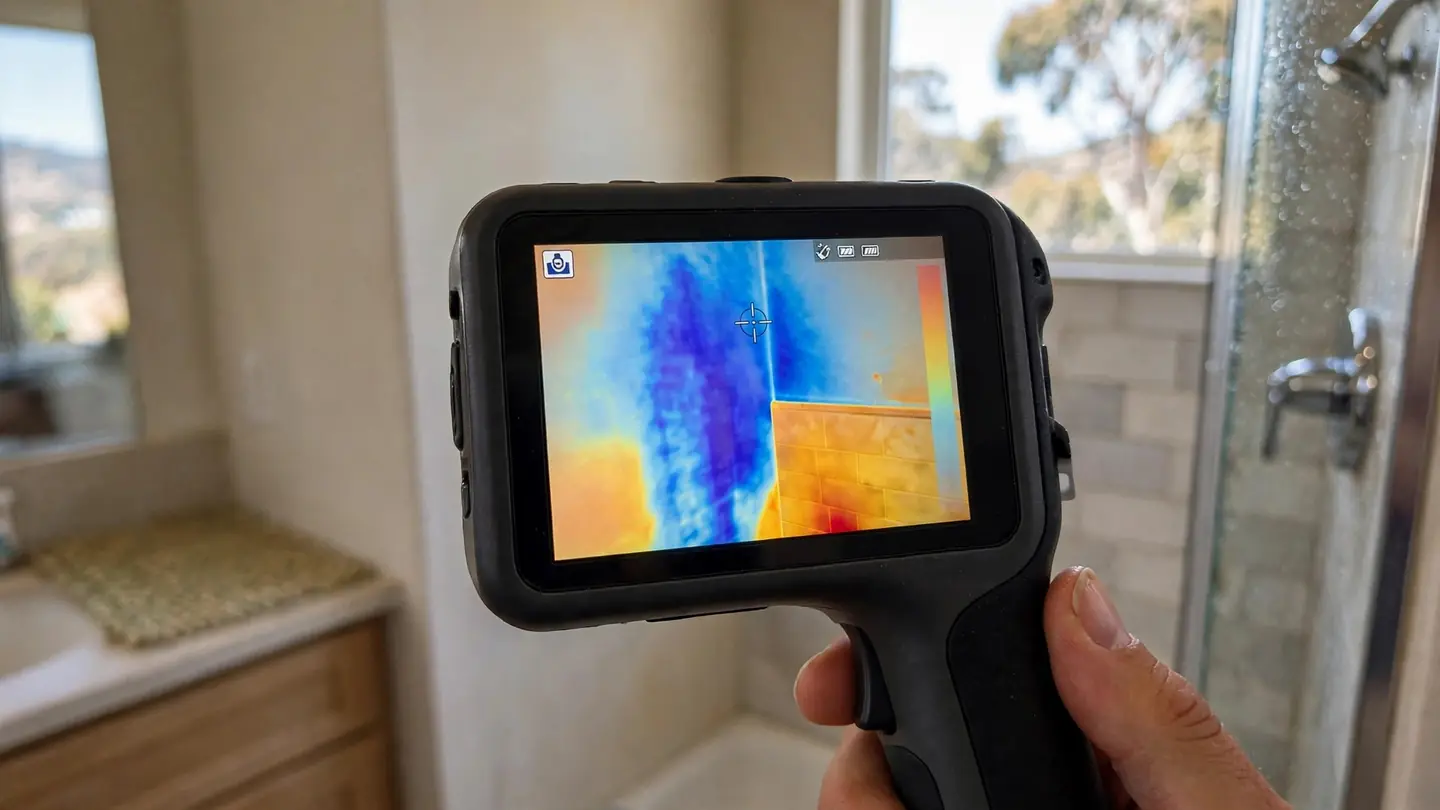
  • Thermal images suggest where moisture may be, and meter readings confirm it.
  • Mold can begin to grow on damp materials within 24 to 48 hours, according to EPA guidance.
  • Coastal humidity can keep hidden moisture from drying on its own.

Signs

Clues that water is inside a wall

  • A musty smell with no visible source

    Often the first sign. It is strongest near the floor and in closets and cabinets on the wet wall.

  • Bubbling or peeling paint

    Moisture pushes paint off the surface, often low on the wall or near a bathroom.

  • Soft or swollen baseboards

    MDF baseboards swell and separate at the joints when the wall behind them is wet.

  • Stains that grow after rain or showers

    Timing tells you the source: storms point to windows and roofs, showers to pans and drains.

  • Warped flooring near a wall

    Wood and laminate cup or lift where water runs out from under the bottom plate.

  • Spotting or dark patches

    Small dark spots on drywall or caulk can be early mold growth.
Sources

Where hidden water usually comes from

In Del Mar homes, the common hidden sources are shower pans and tub surrounds, drain lines inside walls, toilet wax rings, supply lines behind fixtures, refrigerator ice-maker lines, windows and sliding doors on the weather side, decks over living space, and roofs and skylights. Slab leaks also show up at the base of walls far from the pipe.

Coastal air adds a quieter source: condensation. Cold water lines and poorly insulated exterior walls can collect moisture from humid indoor air. It is less dramatic than a leak but can still feed mold in a closed cavity.

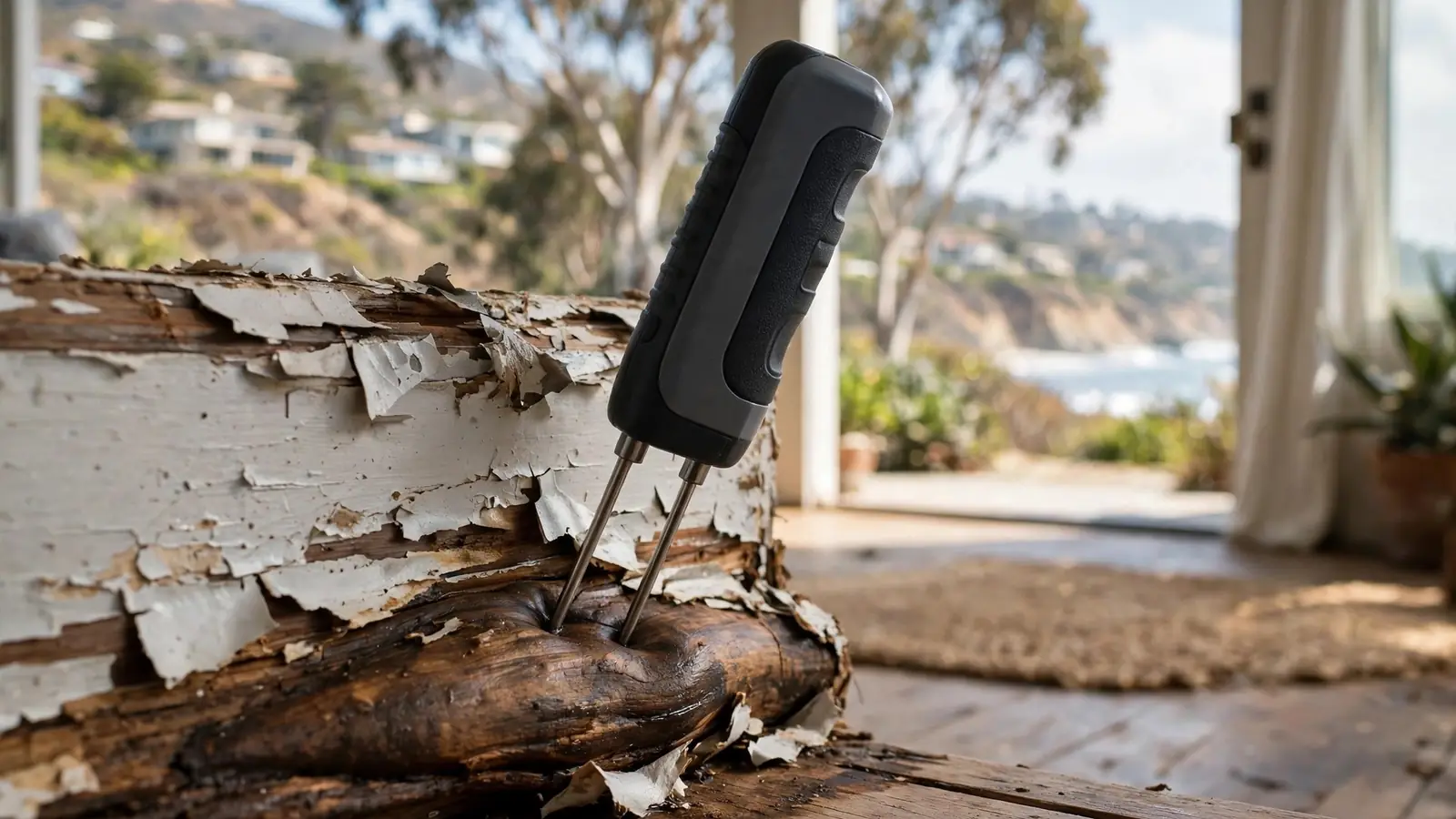
Moisture meter pins pressed into a swollen baseboard with paint peeling above it
Meter readings confirm what a smell or a stain suggests.

Detection

How a contractor finds hidden moisture

  1. 1

    Look and ask

    The contractor checks the clues you have noticed and asks when they appear: after rain, after showers or all the time.

  2. 2

    Scan with a thermal camera

    Evaporating water cools surfaces. A thermal image shows the outline of a wet area across a wall or ceiling.

  3. 3

    Confirm with meters

    Pinless meters scan surfaces; pin meters measure inside drywall and wood. Readings are compared with a dry wall of the same material.

  4. 4

    Map the wet area

    The readings are marked on a sketch or photo so you can see the full extent.

  5. 5

    Open only where needed

    A small inspection hole or a removed baseboard shows what is inside the cavity. Larger openings follow only if readings call for them.

Tools

Tools for finding hidden moisture

What each tool tells you
ToolWhat it doesLimits
Thermal cameraShows temperature differences that suggest moistureCannot confirm water by itself
Pinless moisture meterScans surfaces without damageReads only a short depth
Pin moisture meterMeasures inside drywall and woodLeaves small holes
HygrometerMeasures air humidity and temperatureSays nothing about materials directly
Borescope cameraLooks inside a cavity through a small holeShows only what is near the hole

Checking your home

Room by room: where to look first

Bathrooms come first. Look at the wall outside the shower and the ceiling below any upstairs bathroom, press on the floor around the toilet, and smell the vanity cabinet. In the kitchen, open the sink cabinet and look at the cabinet floor, then check the floor and baseboard beside the dishwasher and refrigerator. In the laundry, look behind the washer at the hose connections and the wall behind them.

Then check the weather side of the house after a storm: the floor inside sliding doors, the corners under big windows and the ceilings below decks. Finish in closets and cabinets on exterior walls, where air does not move and smells collect. A simple pinless moisture meter can help you compare a suspicious wall with a dry one, though a contractor's readings are what count for a claim.

Condos and townhomes

Hidden moisture in shared walls

In attached homes, the wall you share with a neighbor can be wet from their side. If you smell damp on a party wall and find nothing on your side, tell the neighbor and the HOA. Readings on both sides usually settle where the water is coming from, and the CC&Rs decide who fixes it.

Drying

How hidden moisture is dried

Once the source is repaired, the wall cavity has to be dried. For clean water, that often means removing the baseboard, drilling small holes at the base of the wall behind where the baseboard goes, and pushing dry air into the cavity while a dehumidifier runs in the room. If the insulation inside is wet, if there is mold, or if the water was dirty, a section of drywall is removed so the cavity can be cleaned and dried directly.

Drying is checked with daily readings until the wall matches a dry reference wall. In coastal homes, closed-room drying with a dehumidifier is usually faster than relying on open windows, because outdoor air is often humid.

Prevention

Preventing the next hidden leak

Re-caulk tubs and showers when caulk cracks, and have a shower that stains the wall outside it checked for a failed pan. Replace supply lines every several years. Clean sliding door tracks and weep holes before winter and check seals on windows that face the ocean. Put leak sensors in places you rarely look, such as under sinks, behind the refrigerator and beside the water heater.

Pay attention to smells. A musty odor in one room that comes and goes with rain or showers is worth investigating while the damage is still small.

If your water bill rises without a reason, check the meter with all water off. A moving meter means water is going somewhere.

FAQ

Hidden moisture questions

Can a thermal camera see through walls?

No. It sees surface temperature. A cool patch suggests moisture inside, which a meter then confirms.

Will the wall need to be opened?

Not always. Small holes behind baseboards are often enough to dry a cavity after a clean leak. Wet insulation or mold usually means removing drywall.

How do I know if it is mold or just a stain?

You cannot always tell by looking. Smell, growth over time and a meter reading help; testing can confirm.

Can hidden moisture dry on its own?

Rarely in a closed wall, especially near the coast where air is humid. It usually needs the source fixed and active drying.

Sources and citations

  1. [1]EPA: A brief guide to mold, moisture and your home
  2. [2]IICRC S500 Standard for Professional Water Damage Restoration
  3. [3]EPA: Protect your family from exposures to asbestos
  4. [4]EPA: Renovation, Repair and Painting Program

When to stop and test

Opening walls in homes built before 1980 can disturb asbestos in joint compound or texture, and older paint may contain lead. [3] If you see mold over more than a small area, the cleanup may need containment.

  1. Do not sand or scrape older walls before testing
  2. Do not cover mold with paint
  3. Keep the area closed off if mold is visible
Thermal camera screen showing a cool patch spreading up an interior wall beside a shower

Hidden moisture

Smell something musty or see a stain spreading?

Call and you are connected directly with an independent restoration contractor, any hour, who can find hidden moisture and dry it.

Call now(888) 319-1707
Call Now(888) 319-1707