
Key facts: Del Mar Village
- Del Mar Village is the city's commercial core along Camino del Mar, with mixed-use buildings combining shops, restaurants, offices and residences.
- In shared buildings, a single leak often affects more than one unit and more than one insurer.
- Restaurant drain and grease backups are treated as Category 3 sewage under the IICRC S500 approach.
- Condo responsibility for shared pipes and walls is usually set by the association's governing documents (CC&Rs).
Covered area
Del Mar Village blocks covered by this line
Calls from Del Mar Village homes, condos and businesses can be connected to an independent restoration contractor.
- 92014The village along Camino del Mar, the side streets from about 9th to 15th Street, and the residential blocks between the highway and the bluffs.
About the village
What makes Del Mar Village water damage different
Del Mar is a small city, and the village is its downtown: a compact strip of Camino del Mar lined with cafes, restaurants, boutiques, galleries, salons, real estate offices and small inns, with homes and apartments on the streets that run off it toward the beach and up the hill. Many buildings mix uses. A two- or three-story building might have a restaurant and a shop at street level, offices on the second floor and apartments or condos above.
That mix is what shapes water damage here. In a detached house, a leak is one owner's problem. In a mixed-use building, a washing machine overflow in an upstairs unit can come through the ceiling of a business below, soak its stock and close it for days. A restaurant's floor drain backup can spread under a shared wall into a neighboring shop. Each space may have a different owner or tenant, a different insurer and a different person who can approve work.
The village is also built on varied ground. The main street runs along a ridge above the beach, with the land falling toward the sand on the west and rising toward the hills on the east. Buildings on the downhill side often have lower levels or garages below street grade, and those are where storm runoff and drain backups tend to collect.
Finally, the village sees a lot of foot traffic and events, especially in summer and during the racing and fair seasons at the fairgrounds to the north. A business that closes for water damage in those weeks loses more than usual, which raises the importance of fast, phased work.
Construction
Village building details that affect restoration
Units stacked over shops
Plumbing in upstairs apartments and offices runs through the ceiling of the ground floor. A leak above often shows first as a stain or drip in the space below.
Shared walls between storefronts
Adjacent shops often share a wall. Water that runs under one can wick into the other, so readings are needed on both sides.
Older buildings with newer fit-outs
Original structures may be decades old, with tenant improvements added over time. Hidden layers of old flooring and wall finishes can trap water.
Commercial kitchens
Restaurants have floor drains, grease lines and interceptors. A blockage can send waste water across kitchen and dining floors.
Lower levels on the beach side
Buildings stepping down toward the beach may have garages or rooms below grade that collect storm runoff.
Flat and low-slope roofs
Many commercial buildings have low-slope roofs with drains. Blocked drains or failed seams leak into the top floor during winter storms.
Shared buildings
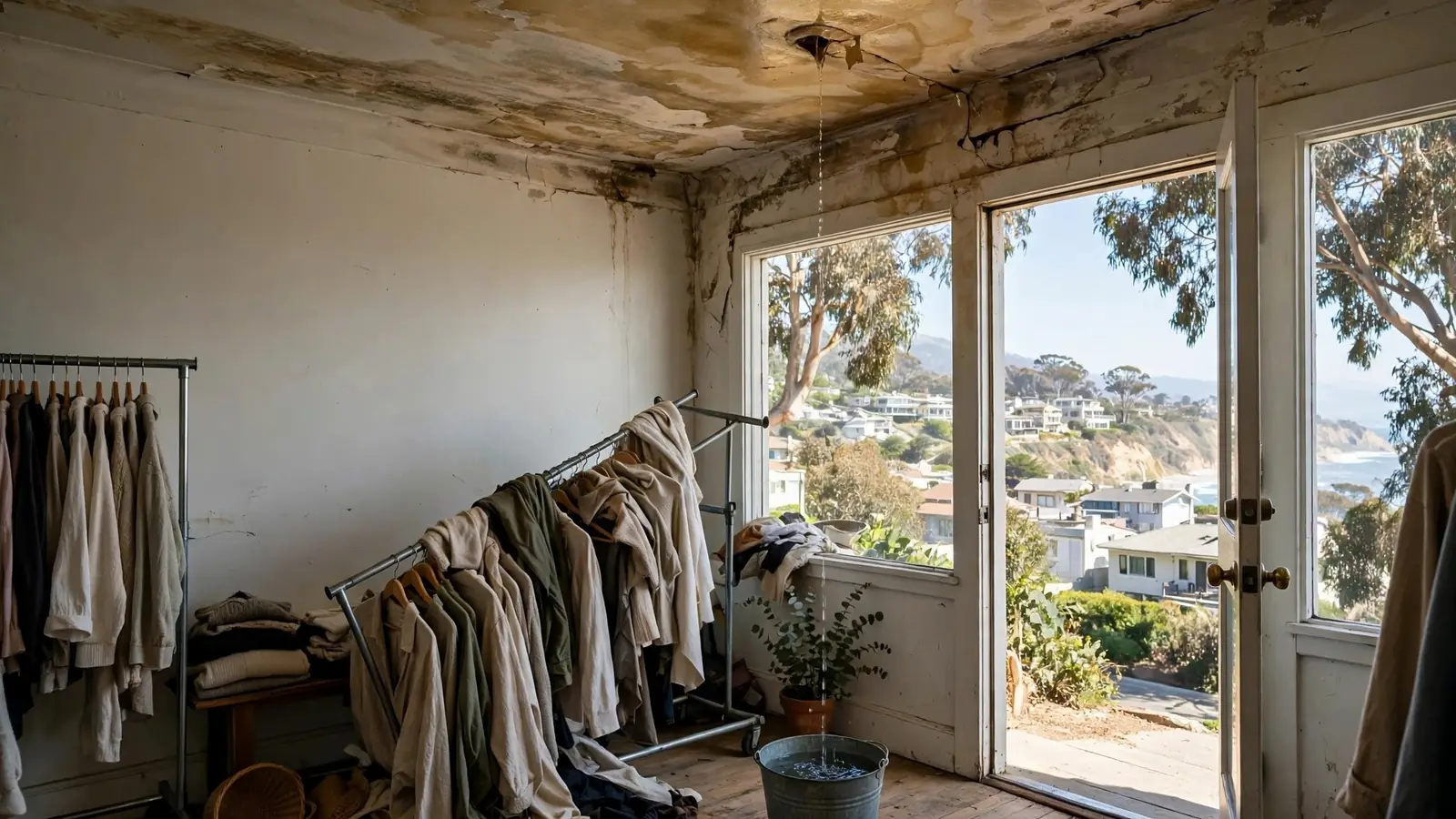
Leaks that cross from one unit to another
When water moves between units, the first job is to find where it started. That is not always obvious. Water from a leaking shower pan upstairs might travel along a joist and come through the ceiling two rooms away, or a slow leak behind a wall might show up first in the unit next door. A restoration contractor uses meters and thermal imaging to trace the path, and a plumber confirms and repairs the source.
Next comes access. The contractor may need to get into every affected unit, including ones whose occupants are away. In condo buildings the HOA manager can often help; in mixed-use buildings it is usually the property manager or owner. Getting access arranged early prevents a wet unit from being left undried for days.
Each affected space should be documented separately, with its own photos, readings and drying log. Insurers for the owner, the HOA and each tenant will want to see their part of the loss, and clear records reduce arguments about who is responsible for what.
Responsibility itself is usually set by leases and, for condos, by the association's CC&Rs. As a general pattern, the HOA handles shared pipes and common elements and each owner handles their unit's interior, but documents differ. Read them, or ask the HOA manager, early in the process.
Assessment
What a contractor should check in a village building
- 1
Confirm the source and stop it
Find whether the water came from a fixture, a shared stack, the roof or a drain backup, and shut off the right valve or zone.
- 2
Identify every affected space
Check the units above, below and beside the source, including closed or vacant spaces.
- 3
Set up safety and barriers
Keep customers and residents out of wet areas, especially under sagging ceilings and near electrical equipment.
- 4
Map moisture in each unit
Take readings and thermal images in every affected space and in an unaffected reference area.
- 5
Agree a phased plan
Decide which spaces must reopen first and schedule noisy work around business hours where possible.
- 6
Document each space separately
Photos, readings and logs per unit and per tenant, ready for each insurer.
By situation
Common village water losses and how they are handled
| Situation | Who is usually involved | Typical work |
|---|---|---|
| Apartment leak into a shop below | Unit occupant, building owner, shop tenant | Stop source; drain ceiling; dry both spaces; document stock |
| Restaurant drain backup | Restaurant operator, owner, possibly neighbors | Sewage protocol in kitchen; disinfect; check shared walls |
| Condo shower pan leak into unit below | Two owners, HOA | Trace and repair; dry ceiling and walls below; separate logs |
| Roof drain blockage in a storm | Building owner, top-floor tenants | Clear drain; dry ceiling cavities and walls; repair roof |
| Storm runoff into a lower-level garage | Owner, residents | Extract; clean and disinfect slab; check storage and walls |
| Water heater failure in a closet | Unit owner or tenant, neighbors if shared wall | Shut off; extract; dry walls and floors on both sides |
Food businesses
Restaurants and cafes on Camino del Mar
Restaurants are the busiest water damage settings in the village. Commercial kitchens have floor drains, floor sinks, grease interceptors, dishwashers, ice machines and steam equipment, all of which can leak or back up. A grease blockage can send waste water up through floor drains in minutes.
That water is treated as sewage. The kitchen is contained, the water extracted, wet cove base and wall materials removed, and floors, walls and equipment surfaces cleaned and disinfected before drying. Exposed food and single-use supplies are discarded.
Dining rooms and patios often fare better and can sometimes reopen sooner. Ask the contractor about containment between the kitchen and the front of house, and check with your permit holder whether a health inspection is needed before reopening.
- Grease line cleared before cleanup
- Kitchen contained from dining areas
- Exposed food and supplies discarded

Village homes
Village homes and cottages on the side streets
Not everything in the village is commercial. The streets that run off Camino del Mar toward the beach and up the hill hold older cottages, remodeled houses, duplexes and small apartment buildings. Many date from before 1980, and some much earlier. These homes face the usual interior leaks, such as supply lines, water heaters and old drain pipes, plus storm runoff for those on the downhill side.
Older homes deserve a little extra care during cleanup. Original plaster walls, old wood floors and materials that may contain asbestos or lead paint should be assessed before anything is cut or sanded. [6] A contractor can test suspect materials and adjust the plan.
On the beach side of the village, lower levels and garages sit below the street, and heavy rain can send runoff down driveways and stairs. A trench drain at the bottom of a driveway helps only if it is kept clear of leaves and sand.
Business continuity
Keeping a village business open
Most village businesses are small and cannot absorb a long closure. Restoration can usually be phased so the front of a shop opens while the back dries, or so a dining room reopens while the kitchen is cleaned. Containment walls with zipper doors keep dust and noise down, and some work can be scheduled before or after business hours.
Talk with the contractor early about which areas matter most and when. It helps with staffing, with telling customers when you will reopen, and with your insurer if you carry business interruption cover. Keep a log of days closed and any extra expenses.
Drying
Drying conditions in the village
The village sits on the coast, and outdoor air here is often humid, especially in late spring and early summer when the marine layer sits over the shore for much of the day. Restorers usually dry village buildings with doors and windows closed and dehumidifiers controlling the air. In shared buildings, containment around the wet area also keeps humid air from moving into dry units.
Commercial spaces often have glued-down flooring, carpet tile and suspended ceilings, each of which dries differently. Carpet tile can often be lifted, dried and relaid; glued-down vinyl may trap water underneath and need removal. Suspended ceiling tiles that got wet are usually replaced, but the space above them still needs to be checked and dried.
Insurance
Insurance and paperwork for village losses
In a shared building, several policies may respond to one leak: the building owner's property policy, the HOA master policy for condos, each unit owner's policy and each tenant's business policy. Notify your insurer promptly, share the contractor's documentation for your space, and keep copies of everything.
If the water came from outside, such as street flooding or runoff, standard property policies usually exclude it and a separate flood policy applies. If it came from a sewer backup, check whether your policy has a backup endorsement. The California Department of Insurance can help if a claim stalls. [5]
Prevention
Lowering the risk in village buildings
- 1
Fit leak sensors in every unit
Sensors under sinks, behind toilets and near water heaters warn occupants and managers early.
- 2
Service restaurant grease lines
Keep interceptors and lines on a regular cleaning schedule to prevent backups.
- 3
Check roof drains before winter
Clear drains and scuppers and inspect seams on low-slope roofs.
- 4
Label shut-offs
Make sure every tenant knows where their unit's shut-off is and how to reach the building's main.
- 5
Share an emergency contact list
Owner, manager, HOA and each tenant's contact, so access can be arranged at any hour.
Related problems
Problems that follow village water losses
Mold above ceilings
Insulation and drywall above a leak stay wet if the ceiling is not opened, and mold grows out of sight.
Disputes between owners
Without clear records, owners and insurers can disagree on where a leak started and who pays.
Health code closures
Food businesses may need inspection after a sewage event before reopening.
Lost stock and records
Merchandise, menus, paperwork and electronics often need to be inventoried and replaced.
Hospitality
Small inns and short-term rentals in the village
The village and the streets around it have small hotels, inns and many homes rented to visitors by the night or week. Guests do not always know where a shut-off valve is, may not report a running toilet, and leave on a schedule. A leak found at checkout may have been running since the night before.
Owners and managers can reduce the damage with a few habits: label the main shut-off and each fixture valve, put leak sensors near water heaters and washers, and make the emergency contact obvious in the house guide. When a loss happens, quick photos of the damage and a note of the affected bookings help with both the property claim and any loss-of-income cover. The contractor can tell you how long each room is likely to be out of service.
Specialty spaces
Galleries, salons and offices
Not every village business is a shop or a restaurant. Galleries hold artwork and frames that react badly to humidity, salons have plumbing at every station, and offices have computers, files and carpet tile. Each needs a slightly different approach.
Artwork and framed pieces should be moved out of the wet area first and kept away from both the water and the dry air blowing from equipment, which can crack canvas and paper. Salon stations are checked for leaks under each sink and along the floor. In offices, electronics are unplugged and left off until checked, and paper files that got wet can be frozen to stop damage while a document recovery service is arranged.
Below the street
Parking garages and lower levels
Some village buildings have parking or storage below the street. Those spaces collect runoff from driveways and ramps during heavy rain, and if a sump pump fails, the water can rise quickly. Stored items, electrical rooms and elevator pits are the usual concerns. Pumping out, cleaning and disinfecting the slab, drying the walls and checking electrical and elevator equipment come first; stored contents are sorted with the owners. A working sump pump with a backup, and drains kept free of sand and leaves, are the best defence.
On the call
Questions to ask the contractor about a village loss
Can you work in more than one unit?
Make sure the contractor can assess and dry every affected space, not just the one you control.
Will you keep separate records per unit?
Separate logs and photos make claims far easier for each owner and tenant.
How will you protect customers and residents?
Ask about barriers, containment and working hours.
Is your CSLB licence current?
You can check any California contractor licence on the CSLB website before work begins.
Storm runoff
When the water comes from the street
Camino del Mar and the side streets slope in several directions, and during heavy winter rain the gutters and drains can run full. Shops with entrances at or below the sidewalk, and homes whose driveways tip toward a garage, can take water at the door. That water has crossed streets and parking areas, so it is handled as contaminated. Sandbags or a door barrier help if they are in place before the storm; once water is inside, the priorities are moving stock off the floor, keeping power off in wet areas and documenting the damage. Storm runoff is usually a flood claim rather than a property claim, which is worth knowing before you call your agent.
FAQ
Del Mar Village water damage questions
Does this line cover Del Mar Village businesses?
Yes. Calls about shops, restaurants, offices, condos and homes in the village are connected to an independent restoration contractor.
Water is coming through my shop ceiling from upstairs. What do I do?
Move stock and customers away, put a bucket under the drip, and contact the upstairs occupant or building manager to shut off the water. Then call; the contractor will need access to both spaces.
Who pays when a neighbor's leak damages my unit?
It depends on the cause, the lease or CC&Rs and the policies involved. Document your damage and notify your insurer; insurers often sort out responsibility between themselves.
Can my restaurant reopen the same day?
Rarely after a sewage backup in the kitchen, because it must be cleaned and disinfected first. The dining room may reopen sooner if it was not affected.
Do condo buildings need HOA approval for emergency work?
Emergency mitigation inside your unit generally should not wait. Notify the HOA promptly, especially if shared pipes or walls are involved.
How do I prove the leak started in another unit?
The contractor's moisture map and the plumber's repair notes usually show the source. Ask for copies.
Can work be done after hours?
Often yes. Ask during the call about scheduling noisy work outside business hours.
What if the leaking unit is empty and nobody can be reached?
Tell the building manager or HOA right away; they usually have emergency access rights. Shutting off the building main may be needed until the unit can be opened.
Are village homes handled differently from businesses?
The drying process is the same. The differences are in access, coordination and documentation when a building is shared.
Sources and citations
- [1]Coastal Commission: City of Del Mar Local Coastal Program sea level rise grant application
- [2]Wikipedia: Del Mar, California
- [3]IICRC S500 Standard for Professional Water Damage Restoration
- [4]EPA: A brief guide to mold, moisture and your home
- [5]California Department of Insurance
- [6]EPA: Protect your family from exposures to asbestos
- [7]EPA: Renovation, Repair and Painting Program
- [8]Wikipedia: Del Mar Fairgrounds
- [9]Contractors State License Board (CSLB)