
Key facts: Olde Del Mar
- Olde Del Mar is the hillside area in the southern part of the City of Del Mar, rising toward Crest Road and Crest Canyon.
- Crest Canyon is an open space preserve within the San Dieguito River Park system.
- Water running off a slope collects against uphill walls and at the lowest level of a hillside home.
- Older clay and cast-iron sewer laterals are prone to root intrusion and cracking.
Covered area
Olde Del Mar streets covered by this line
Calls from Olde Del Mar homes can be connected to an independent restoration contractor.
- 92014Olde Del Mar's hillside streets from the village up to Crest Road, the Crest Canyon rim and the southern city limits.
About Olde Del Mar
Why Olde Del Mar homes take water differently
Olde Del Mar is the older residential heart of the city's south side. Streets wind up the hill from Camino del Mar, past houses that range from modest mid-century homes to architect-designed rebuilds, until they reach Crest Road along the ridge. To the east the land drops into Crest Canyon, an open space preserve that is part of the San Dieguito River Park, and to the west it falls toward the coast. [2]
Slope is the theme. Many lots are steep enough that houses step down the hill, with a main floor at street level and one or more levels below, or the reverse, with the street at the bottom and the house climbing above it. Where a lower floor is set into the hillside, its uphill wall is effectively a retaining wall holding back soil, and soil holds water after rain.
Trees are the second theme. Mature pines, eucalyptus and other large trees shade many lots. They are part of the character of the neighborhood, but their roots go looking for water and often find it in the joints of old clay or cast-iron sewer laterals. Their needles and leaves also fill gutters, roof valleys and drains, which matters a great deal during winter storms.
Add a housing stock that mixes original construction with decades of additions, and water damage in Olde Del Mar tends to involve hidden paths: water entering at one level and showing up at another, or a slow leak behind a retaining wall that is only noticed when a lower-level room starts to smell musty.
Construction
Olde Del Mar construction details that affect restoration
Lower levels set into the hill
Rooms below the main floor often have an uphill wall against soil. After heavy rain, water can seep through that wall or along the slab edge.
Retaining walls and drainage
Retaining walls around and below homes need working drains behind them. When those drains clog, water builds up and finds its way inside.
Decks above lower rooms
Hillside homes often have decks above lower rooms. A failed membrane or drain can leak into the ceiling below for months.
Additions on different foundations
A home may combine an original raised floor with a newer slab addition. Water moves differently in each, and the joint between them is a weak spot.
Skylights and complex roofs
Remodels with skylights, clerestory windows and multiple roof planes have more flashing and valleys to fail.
Mature trees near sewer lines
Roots from large trees can crack and fill old laterals, leading to backups at the lowest drain in the house.
Runoff
Storm runoff on Olde Del Mar slopes
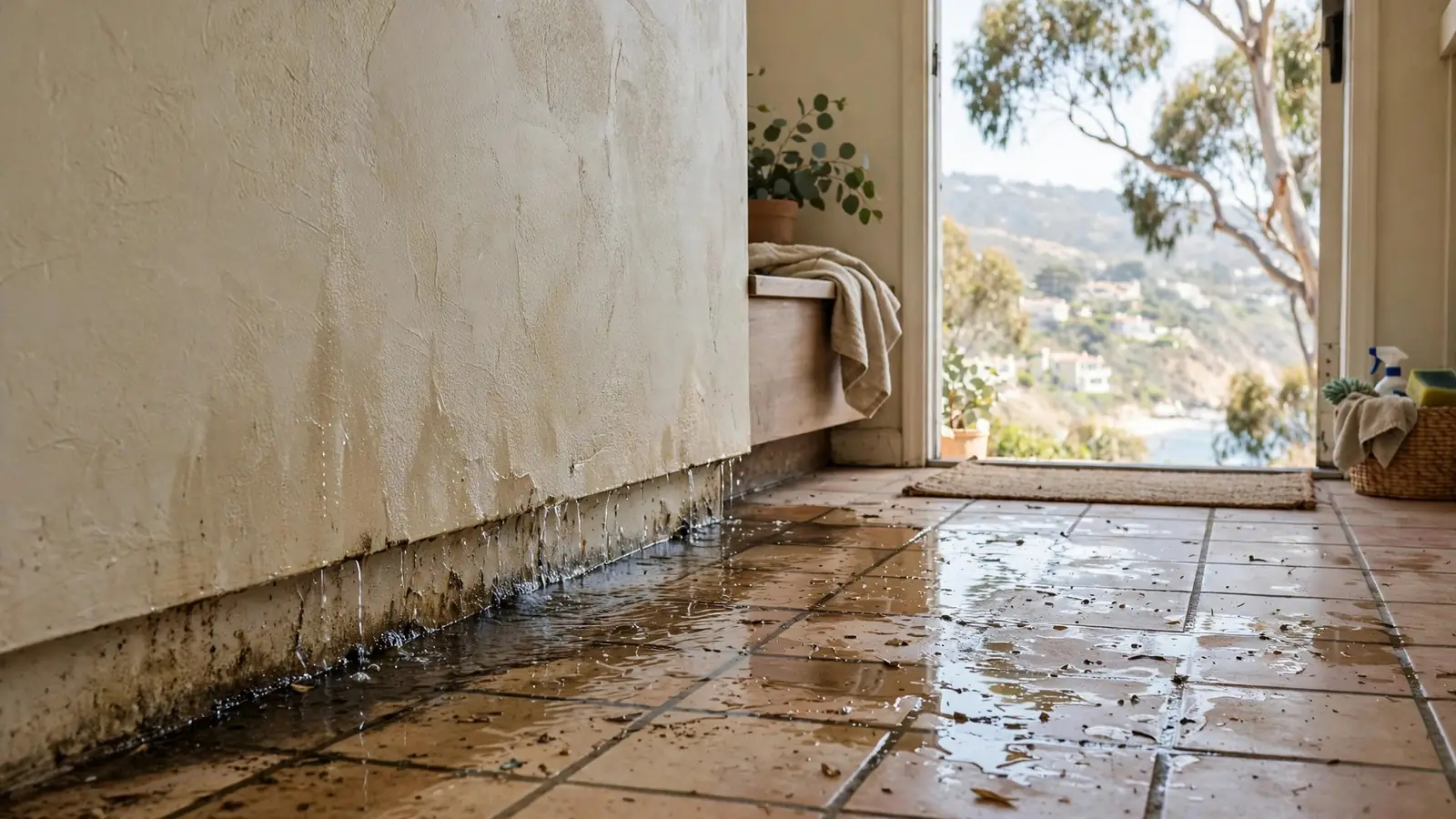
Southern California gets most of its rain in a few winter storms, and some of those storms, the ones forecasters describe as atmospheric rivers, can drop a lot of rain in a short time. [3] On the hills of Olde Del Mar, that rain runs off roofs, driveways and steep yards quickly. Where it goes depends on grading, gutters, drains and the neighbors' lots uphill.
Homes at the bottom of a slope, or with a driveway that tips down toward a garage, are the ones that usually take water. It can come in under a garage door, through a lower-level door, or through the uphill wall of a room set into the hill. Runoff that has crossed yards and streets is treated as contaminated, so porous materials it soaks are usually removed rather than dried.
Erosion adds debris. After a big storm on the slopes near Crest Canyon, mud and leaves can wash against walls and into window wells. Clearing that material from around the house, and checking that drains are flowing, is part of the cleanup.
Assessment
What a contractor should check in an Olde Del Mar home
- 1
Trace the water path
Hillside water may enter at one level and show up at another. Readings at each level, including inside closets and under stairs, show where it travelled.
- 2
Check the uphill walls
Take readings along the base of walls set into the hill, and look for efflorescence, a white mineral crust that shows repeated wetting.
- 3
Look above
Inspect decks, skylights, roof valleys and gutters above the wet area for leaks.
- 4
Check the lateral
If water came up through a drain, a plumber should camera-inspect the sewer lateral for roots and cracks.
- 5
Identify materials before cutting
Older sections of the house may have plaster, old flooring or textured ceilings that need testing.
- 6
Plan equipment on a slope
Steep driveways and stairs affect where equipment and debris can go. The contractor should plan safe access.
What you might see
Olde Del Mar water damage clues and causes
| What you notice | Likely cause | What to do |
|---|---|---|
| Damp along the base of a lower-level wall after rain | Groundwater pressure or clogged retaining wall drain | Dry the room; have drainage inspected |
| Water stain on a ceiling under a deck | Failed deck membrane or drain | Repair the deck; dry the ceiling cavity |
| White crust on concrete or block walls | Repeated seepage leaving minerals | Find and fix the water source; dry and monitor |
| Lowest shower or toilet backs up | Roots or a crack in the sewer lateral | Stop water use; plumber clears and inspects; sewage cleanup |
| Drip around a skylight in winter | Flashing or seal failure | Repair skylight; dry insulation and drywall |
| Musty smell in a lower bedroom | Hidden moisture behind a wall or under flooring | Moisture mapping; open and dry as needed |
Decks
Decks, terraces and the rooms below them
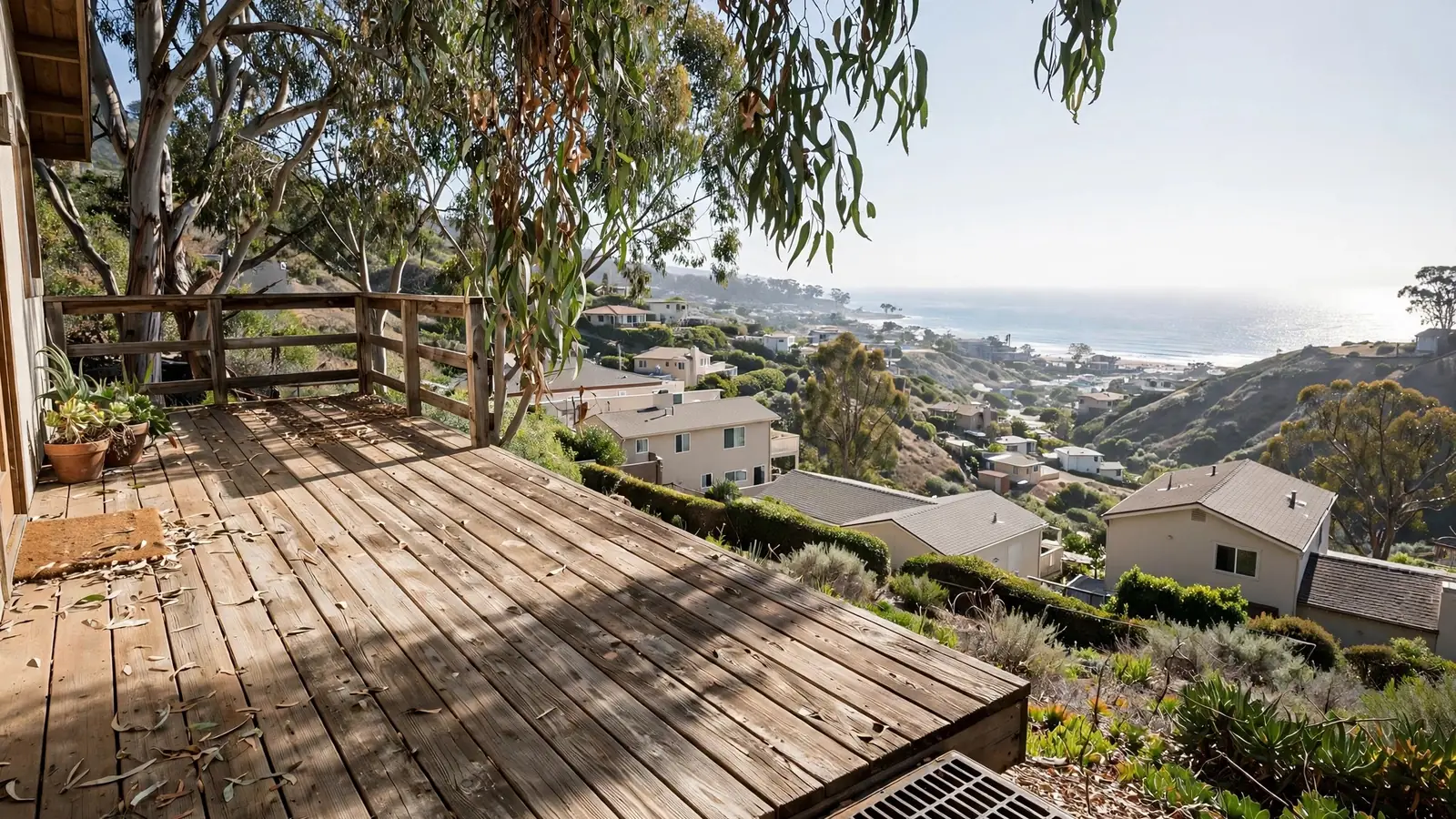
Hillside living in Olde Del Mar often means decks and terraces with views, sometimes built over a garage, a bedroom or a family room. Those decks are roofs as far as the room below is concerned, and they rely on a waterproof membrane, careful flashing at the walls, and drains that stay clear.
When any of those fail, the leak is usually slow and hidden. Water seeps through the deck, soaks the framing, and appears months later as a ceiling stain, sagging drywall or a musty smell below. By then, the joists and sheathing may be damp or rotting.
Restoration means drying or removing the wet ceiling materials below and drying the framing, but the leak has to be fixed first. A deck or waterproofing contractor repairs the membrane and drains.
- Clear deck drains before the rainy season
- Watch for ceiling stains below decks
- Fix the membrane before drying
Backups
Sewer laterals and tree roots
Many Olde Del Mar homes have sewer laterals that are decades old, laid in clay pipe or cast iron. Clay pipe comes in short sections joined at bell joints, and roots from nearby trees find those joints, grow in, and form dense mats. Cast iron corrodes from the inside and can crack or flatten. Either way, the lateral eventually blocks, and waste water backs up through the lowest drain in the house.
On a hillside home, the lowest drain might be a shower or toilet in a lower bedroom suite, a laundry drain or a garage floor drain. When it backs up, the water is sewage, Category 3, and the room needs containment, removal of soaked materials, disinfection and drying. [4]
Before cleanup finishes, a plumber should clear the line and run a camera through it. If roots or cracks are found, repairing or lining the lateral prevents the next backup. In most cases the lateral from the house to the public main is the owner's responsibility.
Roof leaks
Roofs, gutters and skylights under big trees
Pine needles and eucalyptus leaves fill gutters and roof valleys quickly, and on a complex roof with many valleys, a blocked valley can send water under shingles or tiles and into the attic. Skylights, which are common in remodeled homes here, add more flashing to maintain.
Roof leaks are slow and hidden. Water soaks attic insulation, runs along framing, and may come down inside a wall before it shows on a ceiling. Restoration means removing wet insulation, drying the attic framing and any wall cavities the water reached, and replacing ceiling drywall that sagged or stained, once the roofer has made the repair.
A fall check, before the first storm, is the best prevention: clear gutters and valleys, look at skylight flashing, and trim branches that touch the roof.
Drying
Drying hillside homes
Drying a hillside home often means drying several levels at once, and water that soaked a lower-level wall against the hill may keep wicking in from the soil until the drainage is fixed. Contractors dry the room with dehumidifiers and air movers and monitor the uphill wall closely; if readings stop improving, the problem is probably outside.
Coastal humidity also plays a part, though Olde Del Mar sits higher than the beach. Closed-house drying with dehumidifiers is usually the most reliable. On dry, warm days, especially when Santa Ana winds blow, outdoor air may help, but that decision should follow the readings.
Rebuild
Rebuilding and drainage fixes
Once the house is dry, the rebuild is a chance to deal with the cause. For lower-level seepage, a drainage or waterproofing contractor can look at the retaining wall drain, the waterproofing on the outside of the wall, and the grading around the house. For deck leaks, a new membrane and better drains. For repeated runoff, regrading, channel drains or a small berm can redirect water away from doors.
Hillside work in Del Mar can need city review, especially grading and structural changes. Ask the City of Del Mar's planning and building staff before you start. Inside, water-resistant materials on lower floors, such as tile or sealed concrete, recover better from future leaks than carpet.
Insurance
Insurance for Olde Del Mar water damage
Sudden internal leaks, such as a burst pipe or a failed supply line, are usually homeowners claims. Seepage through walls, long-term deck leaks and repeated roof leaks may be treated as maintenance issues or excluded, depending on the policy. Surface runoff from a storm is often treated as flood. Sewer backup may need an endorsement.
Because hillside water damage often has more than one cause, good notes help. Photograph the water path, keep the contractor's moisture map and drying log, and keep any reports from plumbers, roofers or drainage contractors. The California Department of Insurance can help if you have trouble with a claim. [6]
Prevention
Preparing an Olde Del Mar home for winter
- 1
Clear gutters, valleys and deck drains
Do this in the fall and again after the first big storm.
- 2
Check retaining wall drains
Make sure weep holes and drain outlets are open and flowing.
- 3
Camera-inspect an old lateral
Especially if you have large trees near the line or a history of slow drains.
- 4
Look at driveway and door drains
Clear trench drains at the bottom of driveways and stairs.
- 5
Trim trees off the roof
Branches that touch the roof drop debris into valleys and damage roofing.
Related problems
Problems that follow hillside water damage
Mold in lower levels
Rooms set into the hill stay cooler and damper, so mold grows faster if drying is incomplete.
Rot in deck framing
Long-term leaks rot joists and sheathing under decks and terraces.
Efflorescence and paint failure
Repeated seepage leaves mineral crusts and pushes paint off concrete walls.
Repeat sewer backups
A lateral full of roots will block again until it is repaired or lined.
Interior leaks
Water heaters and laundry on lower floors
In stepped hillside homes, the water heater and laundry are often on the lowest level or in a garage tucked under the house. When a tank fails or a washer hose bursts there, the water spreads across a slab or into rooms that are already the dampest in the house. If the space is finished, carpet and drywall take the water quickly.
Because these spaces sit against the hill, they also dry more slowly. Expect the contractor to use containment and dehumidifiers sized to the room and to check the uphill wall in particular. A drain pan under the water heater with a line to a drain, braided washer hoses and a leak sensor are simple ways to keep the next failure small.
Canyon edge
Homes that border Crest Canyon
Houses on the canyon rim have open space behind them, which brings views but also a slope that sheds water and debris toward the canyon and sometimes back toward the house, depending on the grading. Brush, leaves and soil can wash into side yards and window wells during heavy rain. Small animals from the canyon sometimes find their way into crawlspaces and under decks, especially if a vent screen is damaged.
After a storm, check the side and rear of the house as well as the front: window wells, crawlspace vents, the base of walls and any drains that discharge toward the canyon. If water got under a raised floor, the crawlspace needs to be inspected and dried, and torn vent screens replaced so the space stays sealed.
Older and newer
Remodels that hide old problems
Many Olde Del Mar houses have been remodeled more than once. New finishes can sit on top of old ones: a new floor over an older floor, new drywall over plaster, a new bathroom over an old drain line. When water gets in, those layers trap it and hide where it went. A contractor may need to open a small inspection hole to see what is underneath before deciding whether to dry in place or remove. Ask for photos of what they find; it is useful for your records and for any future remodel.
On the call
What to tell the contractor about your Olde Del Mar home
Which level is wet
Say which floor the water is on and whether the room is set into the hill or above another room.
When it started
After rain, during a shower, or with no obvious trigger. Timing points to the source.
How to reach the house
Steep driveways, narrow streets and stairs affect equipment. Mention parking and access.
Age of the house and remodels
Original construction date and major remodels help the contractor plan for older materials.
Any past water problems
Previous leaks, backups or seepage in the same spot often point to the same cause.
FAQ
Olde Del Mar water damage questions
Does this line cover Olde Del Mar?
Yes. Calls from Olde Del Mar homes in ZIP 92014, including the Crest Road area, can be connected to an independent restoration contractor.
Water came in through my lower-level wall after rain. Is that a plumbing problem?
Usually not. It is more often groundwater pressure or a blocked drain behind a retaining wall. The room needs drying, and a drainage contractor should look at the wall.
Is runoff water contaminated?
Water that has run across yards, driveways and streets is treated as contaminated, so porous materials it soaks are usually removed.
How do I know if a deck is leaking into the room below?
Look for stains, bubbling paint or sagging drywall on the ceiling below, especially after rain. A moisture meter will confirm it.
Can tree roots really cause a sewer backup?
Yes. Roots grow into joints in older clay and cast-iron laterals and block them. A camera inspection shows the condition.
Who is responsible for the sewer lateral?
In most cases the property owner is responsible for the lateral from the house to the public main.
Do I need a permit for drainage work?
Grading, retaining walls and structural work often need city review. Check with the City of Del Mar.
Should I run a sump pump in my lower level?
If water keeps seeping into a room set into the hill, a drainage contractor may suggest a sump with a backup. It is a fix for the cause, separate from drying the room.
How long does drying take in a hillside home?
Often three to five days, but walls against the hill can take longer if water keeps coming in from outside.
Sources and citations
- [1]Coastal Commission: City of Del Mar Local Coastal Program sea level rise grant application
- [2]San Dieguito River Park
- [3]NOAA: What are atmospheric rivers?
- [4]IICRC S500 Standard for Professional Water Damage Restoration
- [5]EPA: A brief guide to mold, moisture and your home
- [6]California Department of Insurance
- [7]EPA: Protect your family from exposures to asbestos
- [8]EPA: Renovation, Repair and Painting Program
- [9]Wikipedia: Del Mar, California